


Tinder and Bumble Alternatives: A Gaijin's Guide to Dating Apps in Japan (2026)
 June 19, 2026
You're a gaijin in Tokyo. Busy schedule, mostly foreign social circle, and you've given Tinder and Bumble an honest shot. The result: a lot of matches, a lot of conversations that went nowhere, and not much progress toward what you actually want — a serious relationship with someone in Japan.
If that's your situation, the problem probably isn't you. It's the app.
Table of Contents
Why Tinder and Bumble Underperform for Serious Foreign Professionals in Tokyo
What an Actual Alternative Should Do Differently
Yoitoki: Built as the Alternative to Tinder and Bumble in Japan
Is It Time to Switch?
Summary
Why Tinder and Bumble Underperform for Serious Foreign Professionals in Tokyo
Both apps work as designed — they're just not designed for what you're trying to do.
Tinder's matching logic optimizes for volume, not alignment. You get a lot of matches because the bar for matching is low — mutual swipe based on photos and brief profile info. For a busy professional, that volume becomes a liability rather than an asset: more matches means more time spent filtering for the few that are actually compatible and serious.
Bumble's structure adds a different friction. The women-message-first mechanic is a thoughtful feature for reducing unwanted contact, but it also means your match progression depends entirely on her initiating — which can leave busy professionals with a backlog of matches that never go anywhere because neither side moves first.
Neither app filters for serious intent in Japan specifically. Both have global user bases adapted for the Japan market, not built around it. In Tokyo, this means you're competing in a pool that includes a wide range of intent — casual exploration, language exchange seekers, people just curious about dating a foreigner — mixed in with people who are genuinely looking for something serious. There's no mechanism to sort for this upfront.
Your time cost compounds with a busy schedule. If you're working long hours, every hour spent sorting through low-precision matches is an hour you don't have. This is the core problem busy professionals run into: the apps require manual filtering work that a demanding job leaves little room for.
Your social circle isn't backing up the apps. If your social circle in Tokyo is mostly foreign, you don't have the organic local network that would otherwise introduce some compatibility filtering before you even match with someone. The apps are doing all the work — and Tinder/Bumble weren't built to do that work precisely.
What an Actual Alternative Should Do Differently
If Tinder and Bumble haven't worked, the fix isn't "try harder on the same apps." It's choosing a platform built around the specific things that are causing the friction.
Intent filtering, not just demographic filtering. An alternative worth switching to should filter for serious relationship intent as a structural feature — not a checkbox buried in a profile that nobody actually screens against.
Matching precision over swipe volume. Fewer, better-matched profiles beats a large pool you have to sort through yourself. For a busy professional, this is the single most valuable trade-off available.
Built for the Japan dating context specifically. Not a global app with a Japan presence — a platform designed around the realities of dating in Japan: konkatsu culture, communication pace, and cross-cultural matching between foreigners and Japanese partners.
Designed to reduce, not add to, your time burden. The right alternative should compress the filtering work you'd otherwise do manually, freeing up the limited time you have for actual connection rather than sorting.
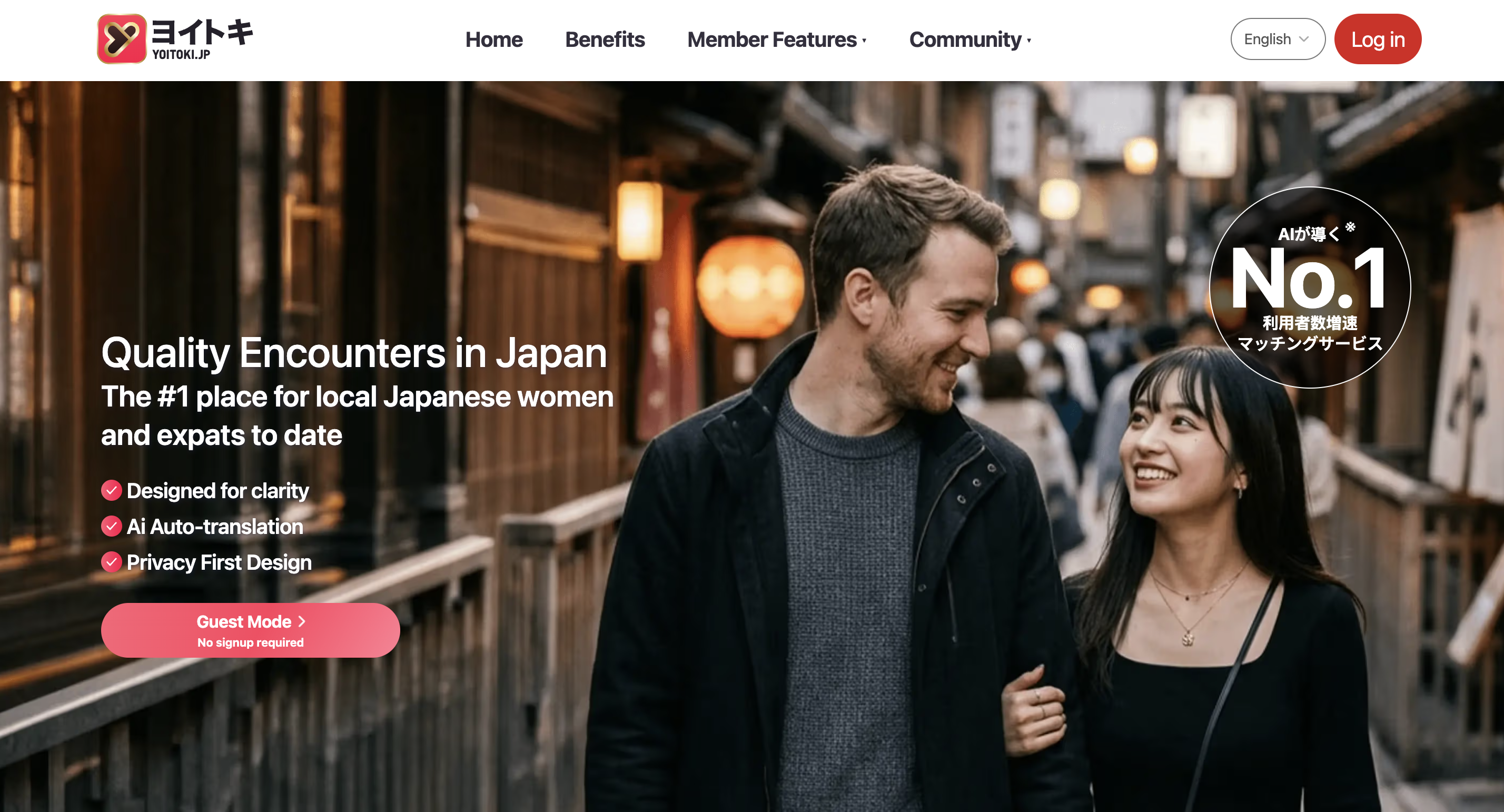
Yoitoki: Built as the Alternative to Tinder and Bumble in Japan
Yoitoki is an AI-powered matchmaking platform built specifically for the use case Tinder and Bumble don't serve well: foreign men in Japan who are serious about finding a long-term partner and don't have unlimited time to find them.
Here's how it differs directly:
| Tinder / Bumble | Yoitoki | |
| Matching approach | Swipe-based, high volume | AI-matched, precision-focused |
| Intent filtering | Minimal or none | Built into the matching logic |
| Time cost | High — manual filtering required | Lower — AI does the pre-filtering |
| Built for Japan specifically | No — global product | Yes — designed for Japan's dating context |
| Cross-cultural matching | Not a factor | Core to the matching design |
| English support | Yes (interface only) | Yes, throughout the experience |
The core shift: instead of swiping through a large undifferentiated pool and hoping to find alignment, you start from a smaller pool that's already been filtered for compatibility and serious intent — which matters most if your time is genuinely limited and your previous experience on volume-based apps left you frustrated rather than closer to what you're looking for.

Is It Time to Switch?
A few signals that it's worth trying an alternative to Tinder or Bumble specifically:
You've had a meaningful number of matches but very few led to real, sustained connection
You're spending more time managing matches and conversations than you have patience for
You keep encountering people whose intentions turn out to be different from yours, often after weeks of investment
Your busy schedule means you need a more efficient process, not just more volume
If most of these sound familiar, the issue likely isn't your approach to dating — it's that the tool you're using wasn't built for what you're trying to accomplish.
Summary
Tinder and Bumble are reasonable apps for casual dating, but they consistently underperform for foreign men in Tokyo who are serious about finding a long-term partner and don't have time to manually filter through a large, low-precision pool.
Yoitoki is built as the direct alternative — AI matchmaking calibrated for serious intent, designed specifically for the Japan dating context, with the precision and time-efficiency that busy professionals actually need.
Find your alternative to Tinder and Bumble at yoitoki.jp
Continue reading: Best Dating App for Busy Professionals in Japan | How AI Matchmaking Finds Serious Partners Faster in Japan