


Beyond Pickup in Koenji: A Practical Manual for "Intentional Encounters" Deeply Connected by Values
 January 12, 2026
Beyond Pickup in Koenji: A Practical Manual for "Intentional Encounters" That Connect Deeply from Values
“I tried to approach someone in Koenji, but the conversation didn’t continue. Even after exchanging contact information, it turned out we wanted different things...” Aren't you a little tired of such vague and one-sided pickup in Koenji? Just going around spots won't create a true sense of connection.
Currently, many guides provide lists of specific spots or superficial approaches. However, they often lead to mismatched intentions and values, resulting in uncertain and exhausting experiences. One-sided approaches lack consideration for the other person and sometimes risk causing discomfort.
In this article, we will explore how to design "intentional and reciprocal encounters" in the unique cultural landscape of Koenji, based on Yoitoki's philosophy of “being guided by professionals and being emotionally equal.” This is not just a “pickup spot guide,” but offers encounter intelligence to respect the other person as a human being and find deep compatibility.

Table of Contents
- Understanding the "Power of Place" in Koenji: The Cultural and Ambient Possibilities for Encounters
- An Approach Based on Mutual Respect: Techniques for "Intentional Dialogue" Practicable in Koenji
- Safety and Manners: Considerations for All Parties to Enjoy Encounters in Koenji
- From Coincidental Encounters to Intentional Relationships: Weaving the Next Steps
- Frequently Asked Questions (FAQ)
- Conclusion: Weaving Coincidence into Destiny
- Shall We Start a New Form of Encounter?
Understanding the "Power of Place" in Koenji: The Cultural and Ambient Possibilities for Encounters
When considering encounters in Koenji, the first thing you need to understand is that this town is not just a "geography," but a powerful magnetic field of "culture" and "values." The people who gather here are unconsciously drawn to this atmosphere. In other words, understanding the place is the first and most important step to connecting with the inner selves of the people you meet there.
Common Values of People Gathering in Koenji (Respect for Music, Creativity, and Individuality)
Walking through the streets of Koenji, you'll quickly notice this. The deep selections at record shops, the unique displays at vintage shops, and the live sounds leaking from concert halls. All of these are expressions of a culture that respects “active choice and expression” rather than “passive consumption.”
People who choose this town tend to share some common trends.
- A deep affection for music (especially rock and indie): They tend to view music as a "voice" that stirs their life perspectives and emotions rather than just background music.
- A pursuit of individuality over satisfaction with ready-made products: Vintage and handmade items are valued for their stories and uniqueness rather than just being "old" or "rare."
- Tolerance and interest in being "nonconformist": There is a soil in which diversity is accepted as a matter of course.
The "deep compatibility of values and emotions" that Yoitoki's AI "Kokoromusubi" is based on focuses precisely on this aspect. Rather than matching based on appearance or superficial interests, the alignment of inner motivations, such as “why you like it” and “what moves you,” becomes the foundation of sustainable relationships. Koenji is a rare place where abundant "conversation starters" are scattered throughout the city for exploring these inner selves.
Reading the "Context of Place" Changing by Time of Day and Day of the Week
Even when lumped together as "Koenji," its expressions change significantly based on the time of day and day of the week. To enhance the quality of encounters, one needs the intelligence to sensitively read this "context of place" and choose suitable modes of interaction.
- Sunny afternoon on a holiday (around 6 PM): A time when cafes and vintage shops are bustling. Many people are in a relaxed exploratory mode, making it easy to start light and natural conversations based on specific items or stores, such as “That bag is lovely! Where did you find it?”
- Evening to early night in the shopping district (6 PM to 8 PM): The area is lively with locals returning from shopping or heading out for drinks. The atmosphere is casual and everyday. While there is a possibility for casual exchanges, consider that the other person may be on their way to something and aim for short and bright interactions.
- Around live houses and drinking streets at night (after 8 PM): This is a time charged with energy based on specific interests (music). The excitement before and after live performances and the camaraderie among those who love the same artists become strong commonalities. However, since alcohol is involved, there is a responsibility to keep the state of the other person and your own intentions clear. The “clarity of intention” that Yoitoki emphasizes becomes particularly important here as an ethical standard.
Conditions for Natural Interactions Beyond "Pickup"
So, what conditions elevate mere "approaching" to "natural interaction"? It is when there exists a third commonality that transcends "you" and "me."
In Koenji, this "third commonality" is the town itself. Displays at record stores, music from street performers, unique items in shops... All of these can naturally intervene between you and the other person and become mediators that create empathy, saying, “This is nice, isn’t it?”
For instance, the moment you both pick up the same record or see each other wearing a t-shirt of the same band, there is already an unspoken understanding that “we value similar things.” Approaching then becomes an act of confirming that understanding. This is the definitive difference between a one-sided approach and a dialogue shared by those who share a cultural context. Good encounters begin with the mindset to understand the other person's world, that is, the spirit of mutual respect.

An Approach Based on Mutual Respect: Techniques for "Intentional Dialogue" Practicable in Koenji
Once you can understand the place, the next practical step is “how to engage.” The goal here is not one-sided “hunting for prey,” but to build a bridge of equal curiosity between two people. To achieve this, it’s essential to refine the quality of communication itself.
Starting Natural Conversations from Observation and Empathy
Begin not with “Hello,” but with your interest in “your world.” This is the first principle.
Specific openers that utilize context:
- (At a record store) “Great choice with this album! Which track do you like the most?”
- (At a vintage shop) “This design is retro and lovely. It has a vibe from the 60s, doesn’t it?”
- (In front of a live house) “The current band was amazing! I got chills from that guitar work.” The point is to affirm the other person's choices and experiences, and ask about their reasons. This is an act of opening a window to the values within the other person.
Keep questions open-ended: Ask questions that don’t end with “yes/no,” but leave room for the other person to articulate their thoughts and feelings, such as “What did you think?” or “What attracts you?”
Balancing "Self-Disclosure" and "Reciprocity": Techniques to Deepen Conversations
Once the conversation starts, the technique of "self-disclosure" prevents it from becoming an "interrogation." The emotional equality that Yoitoki advocates is based on mutual exposure of oneself, rather than a hierarchical relationship where one opens up and the other evaluates.
- Mirroring: If the other person talks about music, share a brief story about your favorite music or how music has rescued you.
- The power of “Me too”: “I can relate to that. Actually, I used to…” Allows the conversation to evolve from mere information exchange to “exchange of empathy.”
- Avoid one-sided questioning: After three questions, insert one anecdote about yourself, maintaining a gentle balance. This provides the other person with a psychological safe zone.
Choosing Words to Clearly and Flexibly Convey Intent
In a place like Koenji with high levels of chance, if what each person seeks is unclear, it can lead to misunderstandings later. However, asking straight up “Are you looking for a serious relationship?” can often create pressure in initial encounters.
Instead, there is a more natural way to express intent in line with Yoitoki's values. “I had a wonderful day encountering such fantastic music (or items), and it was truly nice to talk with someone who could share that experience. Discovering each other's worlds through a chance encounter has a different kind of excitement than dating apps.” This message includes,
- The joy of affirming the current encounter.
- A perspective that views “chance encounters” as valuable.
- An expression of ongoing and mutual interest in “getting to know each other's worlds.”
This is an approach that balances clarity of intention (valuing chance and wanting to know the other person) with flexibility (not rushing to solidify the relationship into a specific form). If the other person resonates, the conversation will naturally expand into the future.
💡 Yoitoki Insights: Beyond Algorithms
The challenges you face are precisely why we developed “Kokoromusubi.” While other apps match based on surface features, our AI detects “deep compatibility” through how you deal with stress, show kindness, and share values.
👉 Find true compatibility with Yoitoki →

Safety and Manners: Considerations for All Parties to Enjoy Encounters in Koenji
No matter how excellent your conversational skills are, they are meaningless without a foundation of safety and respect. Especially in encounters with an unspecified number of people, there is a responsibility as an adult to protect yourself while being considerate of others and the surroundings. The core value of Yoitoki, safety and quality assurance, is not just a topic within the platform. Behaviors in real-life situations express one's essential ethics.
Absolute Principle: Sensitively Detecting Consent and "NO" Signals
All positive interactions are based on clear and continuous "consent." Sensitivity to not overlooking "NO" signals is the first step to trust.
- Verbal signals: Ambiguous words like “Um…,” “Well…,” “Sorry, I’m just…”; attempts to change the subject; short responses.
- Non-verbal signals: Avoiding eye contact, turning their body away, crossing arms, frequently looking at their phone, sighing, looking around for help.
- Behavioral principles: If you sense any of the above signals, immediately cease actions and create distance. Having the courage to say, “I’m sorry for intruding. Excuse me,” and leaving gracefully is the greatest respect and self-defense. Being pushy is not kindness or anything but mere harassment.
Behavior in Public Spaces: Consideration for Shop Owners and Residents
Koenji is a living space. The convenience of individuals seeking encounters must not disrupt the peace of the community.
- Avoid long conversations at shop entrances or private properties.
- Be mindful not to obstruct residents in narrow alleys.
- Be cautious about the volume of your voice, especially at night.
- Littering is out of the question. If you love the culture of the town, show an attitude of protecting that environment.
This is not just about manners but a consciousness of being a member of a community that protects each other. For those seeking serious relationships, such public-mindedness should also serve as an indicator of shared values.
Safety Checklist for Female Readers & Consideration Checklist for Male Readers
Basic Safety for Female Readers
- Sharing Location: Inform a trustworthy friend about who you are with and where you are.
- Initial Contact in Public Spaces: The first meeting should be in a place with high foot traffic and staff on duty, like a café.
- Keep an eye on your drink.
- Exercise your right to say “NO”: If you feel uncomfortable in any way, feel free to decline and leave the situation.
- Ensure Safe Transportation Home: Avoid going home alone late at night and secure a taxi or contact a friend.
Practical Consideration for Male Readers
- Provide opportunities for “choice”: Instead of unilaterally deciding “How about this shop?” present options like “Which do you prefer, a café or a light meal?”
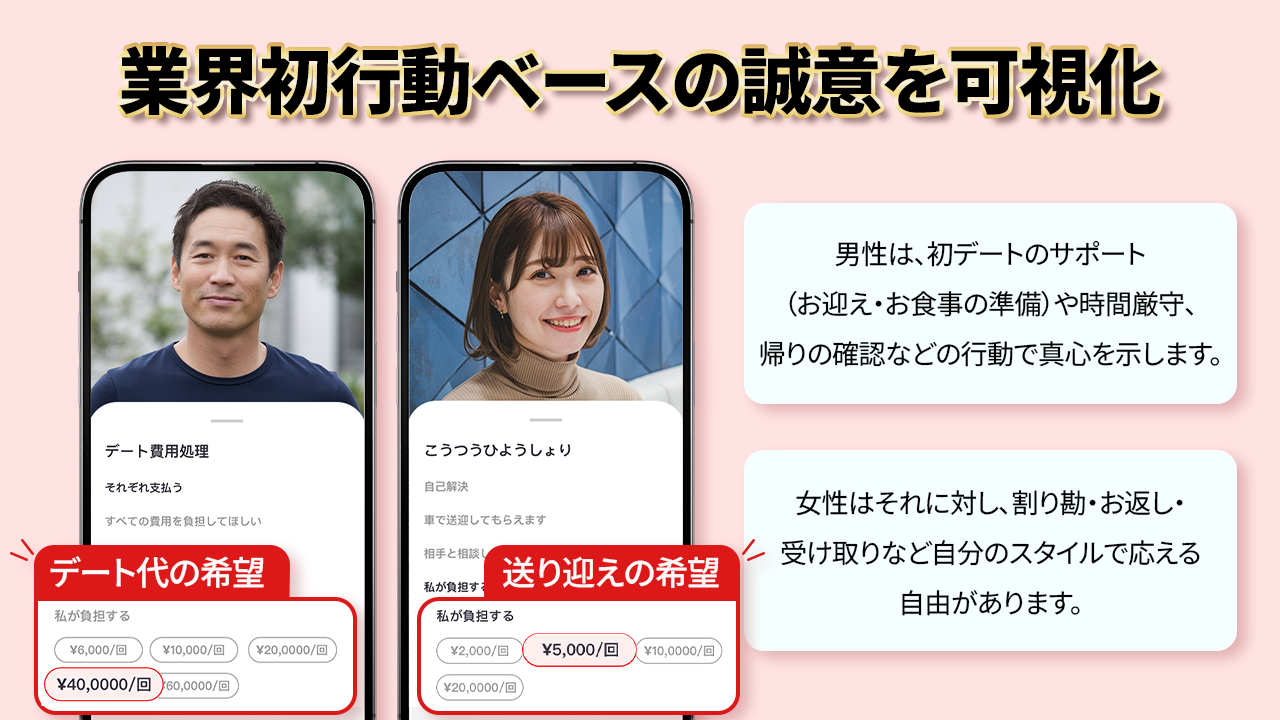
- Attitude of Economic Consideration: Many men cover the expenses for the first meal or drink as part of mutual effort as Yoitoki defines it. This is seen not as an “obligation,” but as a “gesture” of respect and care for the other person. If the other person wishes to go Dutch, respect that intention.
- Offer to escort: If it gets late, suggesting “Shall I walk you to the station?” is a considerate gesture, but prioritize the other’s wishes. If they say “I’m fine,” say “Okay. Take care getting home,” and make a clear exit.
- Respect the pace of communication: Do not rush or pressure if message replies are slow. Respect the other person's rhythm of life.

From Coincidental Encounters to Intentional Relationships: Weaving the Next Steps
You approached someone, the conversation flowed, and you exchanged contact information. That is not the goal but the beginning of true relationship building. What’s crucial in this phase is how to elevate the “joy of coincidence” into “intentional trust.” Herein lies the fork in the road toward sustainable relationships.
First Message to Build Good Relationships After Exchanging Contact Information
The first message should convey more than just “I want to see you again”; it should also communicate “I value today’s conversation.”
【Bad Example】 “Thanks for today. Let’s meet again.”
【Good Example】 “I really enjoyed our conversation today. I greatly resonated with your passion for that band. I listened to that album on my way home, and after hearing your insights, it sounded fresh in a different way. If you’re interested, shall we go listen to that record we talked about at that shop together next time?”
This message includes references to specific conversation content, personal impressions (self-disclosure), and a concrete yet modest suggestion for the future. This shows a clear intention that you remember and respect the other person as an individual.
Proposal for an "Activity-based Date" Sharing Intent in Koenji
Let’s propose “activity-based dates” that go beyond the usual “dinner or drinks.” By “experiencing common interests together,” a deeper mutual understanding can emerge beyond conversation.
- Record shop tour date: Bring your favorite record and discuss why you love it while listening.
- Live house date: Go see an unknown band together. The shared experience of the unknown creates strong bonding materials.
- Strolling through vintage shops: Search for items that would suit each other. This is a playful dialogue exploring each other's tastes and aesthetics.
These dates are not mere consumption activities but the process of mutual effort in creating something together (experience, conversation). The “two-person-three-legged” relationship building that Yoitoki proposes begins precisely from such co-creative spaces.
Timing and Methods for Naturally Discussing Values and Life Visions
As the relationship progresses, it is essential to confirm what both of you are seriously seeking. However, instead of directly asking “What are your views on marriage?” weave it into the conversation.
- Through hobbies: “Why do you value music so much? What do you want to feel in life?” “What message do you want to send about yourself through your fashion choices?”
- Through everyday trivialities: “I recently had a tough time at work. How do you usually relieve stress?” (Values relating to stress tolerance and self-care)
- Positively discussing the future: “I love towns like Koenji where individuality shines. Do you see yourself living in a place that fosters such culture in the future?” (Lifestyle and living concepts)
Yoitoki's AI "Kokoromusubi" supports this “alignment of values” from the profile creation and initial matching stages. Even in real encounters, through repeated dialogues exploring this “why?”, it is possible to discover deep compatibility rather than superficial matches.
Frequently Asked Questions (FAQ)
Q1: Can pickup in Koenji lead to serious relationships or marriage?
A: The place itself does not determine the relationship. What matters is the "intentional communication" after meeting. Even if it starts as a chance encounter, it has great potential to develop into a serious relationship if both parties sincerely disclose themselves and engage in dialogues about values and life goals. Platforms like Yoitoki, which emphasize relational direction from the start, are designed to facilitate this “intentional dialogue” process from the beginning.
Q2: I want to convey serious intentions, but will it scare the other person?
A: Instead of conveying “seriousness” as pressure, express it as “I value these things, and I’m interested in those aspects of you” by opening yourself up and showing interest in the other person. This is at the core of emotionally equal communication. Yoitoki’s profile setting also encourages exploring mutual foundations through self-disclosure.
Q3: How can I find commonalities with someone I met in a place like Koenji?
A: Koenji is a town where it’s easy to find common interests related to “expression,” such as music or fashion. However, deeper commonalities lie in the “why” behind those interests. For instance, even if you both like the same band, the difference in whether you are attracted to the “energy” or resonate with the “lyrical world” indicates different values. Exploring this “why” through dialogue leads to the discovery of deep compatibility. Yoitoki's matching also analyzes “motivations and values” beyond surface-level interests.
Q4: I keep failing to approach people in the streets. What kind of approach suits me?
A: If you feel that approaching an unspecified number of people doesn’t suit you, it may be a sign that you place a higher value on context. In Koenji, utilizing specific live events, workshops, and community cafes where people gather based on common interests from the start is effective. This aligns with the principle of “value-based matching” offered by Yoitoki. Choosing places for encounters based on compatibility rather than chance is a mature choice.
Q5: If I, as a foreigner, seek encounters in Koenji, what particular manners should I be mindful of?
A: First, it’s essential to respect Japan’s personal space and “ma.” Avoid overly direct approaches and closely observe the other person’s responses. Koenji is relatively open, but it’s better to start conversations by showing interest as “an individual” rather than “as someone from a different culture” (for example, discussing the music or fashion they are choosing). Yoitoki has many international members, promoting exchanges based on mutual understanding and respect for different cultures.
Conclusion: Weaving Coincidence into Destiny
The act of pickup in Koenji can be elevated into “the beginning of intentional and mutually respectful human relationships” through your attitude. Read the atmosphere, respect the other person's world, and sincerely convey your own values. Such a step can create encounters with the potential for deep resonance rather than superficial connections.
Finding a piece of music in a record shop in Koenji, later laughing together while listening to it. In this way, a chance encounter can weave into a solid daily life where both of you deeply affirm each other's values. This is a snapshot of the future brought about by relationships that are guided by professionals and are emotionally equal.
Shall We Start a New Form of Encounter?
If you're tired of vague relationships and seek connections built on mutual effort and true understanding, your place is right here.