



Beyond "Kiss Friends": Graduating from Ambiguity to a Relationship Built on Mutual Respect
"Exchanging messages is fun, but the relationship remains ambiguous... Every time we meet, the sense of distance changes, and I can't really figure out what I want." Have you ever felt more anxiety or loneliness than fulfillment in such a relationship, called "more than friends, less than lovers," or "kiss friends"?

While existing articles discuss how to create "kiss friends" and their merits and demerits, they often fail to address the underlying "hunger for a truly deep connection" and the "frustration of misaligned intentions." There remains a desire for a fundamental relationship that cannot be filled with superficial physical contact.
This article conveys perspectives for building a relationship that is "clear in intent, emotionally equitable, and mutually uplifting," while still understanding the contemporary relationship of "kiss friends." For those seeking to break free from ambiguity and aim for a true reciprocal relationship based on mutual respect.
Table of Contents
- The Essence of "Kiss Friends" and the Underlying "Emotional Asymmetry"
- Psychology of Choosing Ambiguous Relationships vs. Psychology of Choosing Relationships with Clear Intent
- Five Steps to Building a Relationship Based on "Mutual Respect"
- Distinguishing High-Quality Encounters: Differences Between Superficial Compatibility and Deep Compatibility
- FAQ Section
- Conclusion
- Shall We Start a New Form of Encounter?
The Essence of "Kiss Friends" and the Underlying "Emotional Asymmetry"
Revisiting Definitions: Is It a Desire for "Intimacy Without Responsibility"?
The term "kiss friends" indicates more than a formal label; it reflects the essential "form" of a relationship. It can be defined as a relationship that enjoys physical and emotional intimacy without the expression of romantic feelings or exclusive commitment. This reflects a modern psychology of wanting to minimize the risk of hurt, maintain freedom, or escape pressure for serious relationships.
However, the core of this definition lies in "asymmetry." There is fundamentally no guarantee that both parties are on the same understanding and expectations. One may perceive it as "casual dating," while the other secretly hopes it is a "prelude to a serious relationship." This "emotional asymmetry" is the source of many misunderstandings and suffering.
Moments When Emotional Discrepancies Arise: Instability Caused by Lack of Commitment
Commitment is not merely a declaration of "dating," but a mutual understanding that "respects and values each other's feelings and time." In a relationship lacking this, significant emotional fluctuations can arise from trivial triggers.
- The Weight of "Seen but Ignored": In a serious relationship, one might brush it off as "maybe they're busy," but in an unstable relationship, it transforms into a significant anxiety of "maybe they've lost interest."
- Prioritization of Schedules: The feeling that one's plans are always postponed invokes the fundamental question, "How valuable am I in this relationship?"
- Taboo of Future Topics: An atmosphere where conversations like "What do you want to achieve in six months?" cannot occur subtly indicates that the relationship itself is a "consumable in progress."
What is crucial here is the concept of "emotional equality." Healthy relationships are built on a foundation where both parties' feelings are equally respected and cared for. A "emotionally equitable" relationship, as proposed by Yoitoki, is not about one-sided consideration or toleration but about listening to each other's feelings and integrating them into the relationship's design. Our "Kokoromusubi AI" analyzes not just surface-level compatibility but also "how emotions are handled," "coping with stress," and "the deep layers of values." By discerning not only superficial affinity but also fundamental emotional compatibility, we adopt an approach that mitigates the risk of "asymmetry" from the very start of encounters.
Experience Interview: "It Was Supposed to Be Fun, Yet I Felt Empty" - Person A (30, Female)
"For about six months, I maintained a relationship similar to 'kiss friends.' When we met, it was genuinely enjoyable, and both dates and conversations flowed. However, after parting ways and being home alone, I often found myself hit by a stronger sense of loneliness than before. When I saw photos of him having fun with other friends on social media, I realized, 'I am only in this small drawer of his life,' which made my heart ache from the feeling of not belonging. The hardest part was not being able to express this feeling to him. I was scared he would say, 'Are you thinking too seriously?' and that the relationship itself would crumble. While there were indeed fun moments, the burden of sealing away my emotions and having to shrink myself was far greater, and in the end, I realized I was losing myself."
This experience shows a lack of "emotional space," rather than physical distance. The more unstable one's position in a relationship, the more one's self-esteem wavers, and true comfort is unattainable.

Psychology of Choosing Ambiguous Relationships vs. Psychology of Choosing Relationships with Clear Intent
Choosing from Fear?: The Psychology of Not Wanting to Get Hurt or Be Bound
Behind our tendency to jump into ambiguous relationships and sometimes remain in them lies a deep psychological "fear."
- Fear of Rejection: Clearly stating, "I am seeking a serious relationship," may lead to the other person pulling away. In that case, pretending not to want anything from the start feels safer.
- Fear of Failure: Past experiences of serious relationships not working out instill a trauma of "what if I get hurt the same way again," which avoids deep connections altogether.
- Fear of Losing Freedom: The misconception that commitment "takes away my time and freedom of choice." This psychology is particularly strong during periods when one wants to focus on personal goals or careers.
These "choices from fear" may provide short-term psychological safety (comfort zone). However, in the long term, they push one further away from the deep intimacy and trust one truly desires, leading to a paradox of creating a new loneliness of "not being able to connect deeply with anyone."
Choosing from Hope: The Psychology of Seeking a Partner to Share Growth
On the other hand, the psychology of trying to build relationships with "clear intent" is rooted not in "fear," but in "hope."
- Hope for Mutual Growth: Wanting to see the world that cannot be reached alone with a trusted partner. Seeking a relationship where both can draw out each other's strengths and grow together through challenges.
- Hope for Deep Understanding: Wanting to have "that one person" in life who can share not just superficial conversations but also one's values, dreams, and even weaknesses and understand each other.
- Hope for Stable Comfort: Wanting to root a tranquility built on solid trust that is not swayed by moods or situations into everyday life.
This "choice from hope" sometimes requires courage. It involves facing oneself, articulating what one truly wants, and expressing that vulnerability to the other person. However, this seemingly risky choice is the only gateway to sustainable and profoundly fulfilling relationships.
Three Questions to Clarify Your True Desires
Are you currently moving out of fear or hope? Take a moment of quiet to ask yourself the following three questions.
- What do I fear most in this relationship? (e.g., being abandoned by him/her, being alone, wasting time)
- If there were no fears at all, what kind of relationship do I genuinely wish to build with this person (or ideal partner)?
- How will that ideal relationship enrich my current life and the future self I aspire to be?
The "true desires" that emerge from these questions serve as a compass in your relationships. The "clarification of intent" that Yoitoki places at the core of its services is precisely about sharing this compass from the beginning. Expressing "I want to aim for a serious relationship" or "I have future partnerships in mind" as "relationship goals" on the platform is not just an expression of hope but a mature first step in respecting each other's precious time and emotions. By doing so, a foundation is laid to meet people whose starting lines align and whose directions match, reducing unnecessary misunderstandings.
💡 Yoitoki Insight: Beyond Algorithms
The challenges you face are precisely why we developed "Kokoromusubi." While other apps match based on surface-level traits, our AI discerns "deep compatibility" such as how to cope with stress, ways to show kindness, and shared values.
👉 Find true compatibility with Yoitoki →

Five Steps to Building a Relationship Based on "Mutual Respect"
To break free from ambiguity and build a sustainable relationship, specific actions are essential. The following five steps are not independent but are part of a cyclical process of relationship building.

Step 1: Deepen Self-Understanding – What Do I Seek from a Relationship and What Can I Give?
All healthy relationships are built on a solid "self." If one's feelings, values, and boundaries are unclear, one cannot communicate clearly to the other person.
- Specific Action: Reflect on past relationships and write down when you felt happy and when you felt hurt. List your "non-negotiable values" (honesty, family views, financial sense, etc.). This is part of Yoitoki's profile creation process, designed to promote self-understanding.
Step 2: Open Dialogue in the Early Stages – Aligning Expectations of the Relationship
This does not mean "jumping into heavy conversations suddenly." It involves asking thoughtful questions that explore each other's thoughts within the flow of natural conversation.
- Specific Action: "What image do you have of the word 'dating'?" "What characteristics do you think define a good relationship?" "How do you consider the balance between private time and our time together?" This dialogue of "clarifying intent" is a culture recommended within the Yoitoki community and helps prevent significant misunderstandings.
Step 3: Set and Respect Boundaries Together
Boundaries indicate "the range in which one feels comfortable" and are a declaration of self-respect. They are not walls to reject the other but fences to keep the relationship healthy.
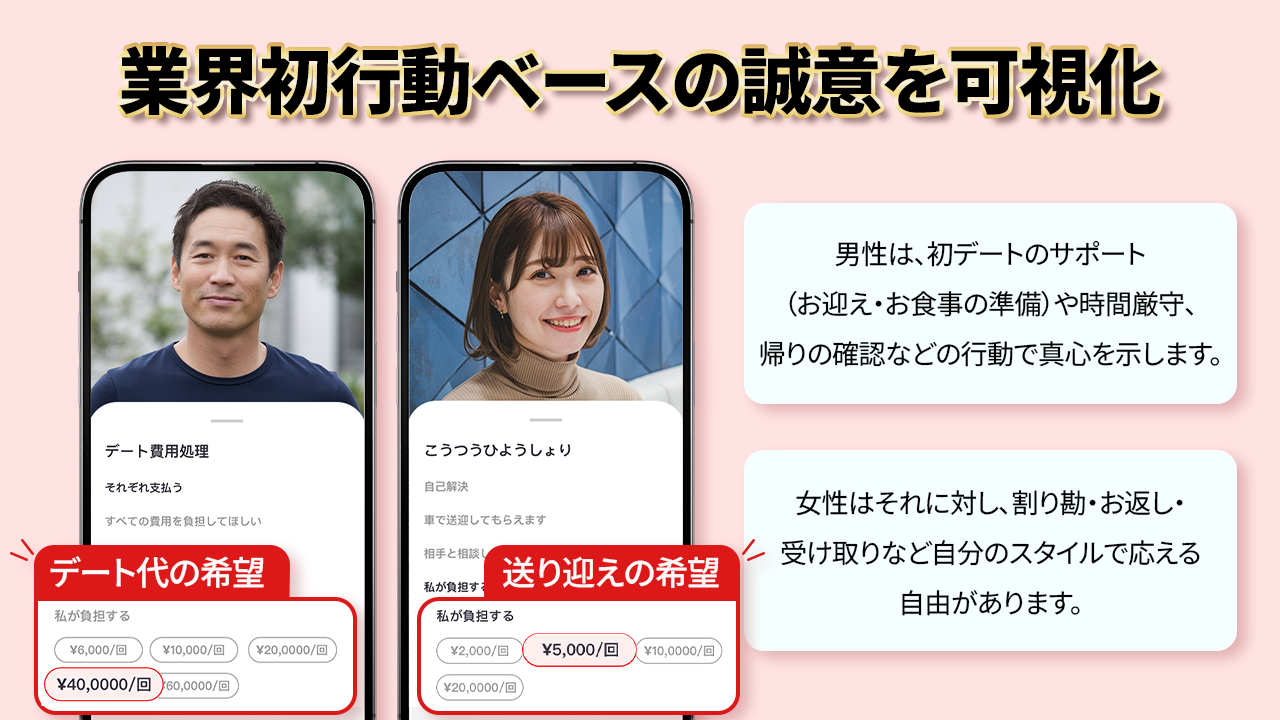
- Specific Action: Discuss openly what makes both uncomfortable regarding communication frequency, social media interactions, and friendships. For example, regarding dating expenses, suggesting, "This time, let me treat you to dinner. I would appreciate it if you could think of something next time," demonstrates a flexible boundary based on gratitude and reciprocity, which Yoitoki emphasizes as "mutual effort and balanced consideration."
Step 4: Confirm the Progress of the Relationship Through Two-Way Communication
Relationships are not static; they are living entities that constantly change and grow. Regularly create opportunities for dialogue, such as "How do you think our relationship is going right now?"
- Specific Action: Make it a habit to have a "relationship meeting" once a month over tea at a café, where you can lightly reflect on the relationship. The key here is to communicate using "I messages" such as "I feel this way," rather than blaming the other.
Step 5: Acknowledge and Support Each Other's Growth in the Relationship
The ultimate goal is for both individuals to walk their own paths while supporting and celebrating each other's journeys.
- Specific Action: Actively show interest in your partner's career goals and personal challenges, offering encouraging words. Also, remain ambitious about your own growth. This "mutually uplifting relationship" is what Yoitoki aims for in sustainable and deeply fulfilling partnerships.
Distinguishing High-Quality Encounters: Differences Between Superficial Compatibility and Deep Compatibility
Having Great Conversations Is Not the Only Kind of Compatibility: Alignment of Values, Life Pace, and Emotional Language
It's indeed pleasant when conversations flow smoothly during first meetings. However, that does not guarantee "deep compatibility." Long-term relationships are supported by alignment on much deeper levels.
- Alignment of Values: Are the beliefs that constitute the core of life similar, such as "prioritizing work vs. personal life," "interacting with family and friends," and "attitudes towards society and money"?
- Alignment of Life Pace: Are there no significant discrepancies regarding current life stages (periods of career focus, seeking stability) or the envisioned life design for the future (views on marriage, living location)?
- Alignment of Emotional Language: Are the ways of expressing affection and gratitude (services, words, time) understandable and receivable by each other?
Yoitoki's "Kokoromusubi AI" focuses on this "deep compatibility." By analyzing not just hobbies or appearance preferences but also stress coping patterns and ways to show kindness—data that delves into the core of personality—we aim to find not just "fun date partners" but "partners who can share life's joys and challenges."
The Importance of a Relationship Where You Can "Show Weaknesses Safely"
At the deepest level of true intimacy lies the "sharing of vulnerability." This means having the comfort to show one's imperfect self, one's failures, and weaknesses without fear.
In "kiss friend" relationships, this vulnerability often becomes taboo. Showing weakness is seen as risking the "lightness" of the relationship and could push the partner away. However, in healthy and deep relationships, there is a foundation of mutual trust that "accepts you, including your weaknesses." The experience of showing one's weaknesses and having them received creates bonds stronger than words.
Expert Opinion: Relationship Counselor Discusses "Foundations of Lasting Relationships" (Hypothetical Interview)
According to relationship experts, the most important element common to lasting relationships is the "secure base function." This means that the very presence of the partner unconditionally accepts, heals, and provides energy for re-launching oneself after facing challenges and sometimes getting hurt in the outside world.
This "secure base" cannot be established overnight. It takes time to build through continuous sincere communication, mutual respect, and intentional relationship care. Yoitoki's platform aims to be a place where people who wish to build such "secure bases" from the start gather. Verified profiles and matching based on deep compatibility provide an environment that fosters the foundation of trust and safety for mature relationships from the outset.
FAQ Section
Q. Is it possible for a casual relationship like "kiss friends" to develop into a serious romance?
A. There are cases, but often, the initial choice of "deliberately ambiguous relationship" carries the risk of leading to distrust regarding "seriousness" later on. The stance of "let's keep it casual" may become the default setting of the relationship, and when one tries to steer it towards seriousness, the partner may not be able to keep up with that change. At Yoitoki, we create a soil where mutual respect for each other's intentions is established from the beginning, fostering the potential for healthy and transparent development.
Q. If I express my desire for a serious relationship from the start, won't the other person pull away?
A. If the other person pulls away upon hearing your serious intentions, it indicates that you were fundamentally misaligned in your relationship goals. This can be viewed not as a "failure," but as a "success in saving time and emotions." Yoitoki provides a space where people heading in the same direction can meet. Demonstrating clear intent is a mature self-expression that cherishes each other's precious resources.
Q. Where should I start if I want to build a relationship based on mutual respect?
A. Start by articulating what is important to you, perhaps by writing it down. Then, in new encounter settings, ask the other person similarly, "What do you value?" and approach with a genuine intent to listen. Yoitoki's profile creation and matching process is designed to naturally promote self-understanding and mutual understanding.
Q. My past experiences with ambiguous relationships have become a trauma, making me afraid of serious encounters.
A. That feeling is completely valid. That experience is evidence that you are genuinely seeking deep trust and comfort, and it is also a sign of a healthy heart. The key is not to carry past patterns into the future. Yoitoki's community gathers people who also value seriousness and clarity. In an environment where intentions can be shared from the start, you might be able to take the next step without fear of past wounds.
Q. In a relationship that respects each other's feelings, doesn't that create fatigue from too much consideration?
A. Healthy mutual respect is fundamentally different from "over-caring" or "hesitation." It is a foundation of natural and equal communication that assumes the existence and will of the other from the start. Instead of holding back what you want to say, consider how to convey it. Rather than simply complying with the other person's opinions, strive to understand why they think that way. When this foundation is shared, unnecessary misunderstandings and mental fatigue are significantly reduced, and the relationship often becomes lighter and more sustainable.
Conclusion
In all human relationships, not just "kiss friends," the most important aspects are "mutual respect" and "clear intent." While ambiguity may provide temporary comfort or freedom, sustainable trust, deep intimacy, and genuine peace are built only upon sincere dialogue and respect for each other.
What you truly desire is not just "someone to be with" but a "partner" who understands your values, genuinely rejoices in your growth, and supports each other in difficult times. Such relationships are not merely products of chance but can be consciously begun from a place where both parties promise to uplift and respect each other from the start.
Shall We Start a New Form of Encounter?
For those who are tired of ambiguous relationships. If you seek connections built on mutual effort and true understanding, your place is here.