


What does a man really mean when he says "I want to cheat"? A mutual understanding guide to deepen trust from the "fraying" of the relationship.
 January 6, 2026
What is the true intention behind "I want to cheat"? A guide to mutual understanding for deepening trust from the “fraying” of relationships

When a partner confides, "I feel like cheating...". Or perhaps you've felt vague anxiety or distress from the words "I want to cheat", which you often see on social media. In many modern romances, genuine intentions become obscured in the space between "true feelings and social pretenses" and "desires and responsibilities". It can feel like trying to discern the other person through fogged glass, an uncertain and exhausting sensation.
Many resources that address this issue tend to dissect male psychology as an "object of analysis" and portray women as the "ones taking measures". However, this does not lead to fundamental solutions. This approach presumes an imbalanced relationship based on "surveillance and measures", distancing true trust and mutual understanding. Simple "coping strategies" do not improve the quality of relationships but rather leave a breeding ground for suspicion and distrust.
In this article, based on Yoitoki's philosophy, we will stop viewing the words and feelings of "I want to cheat" merely as "signs of problematic behavior" or "personal flaws". Instead, we will reinterpret it as a “valuable invitation to dialogue” that the relationship itself is issuing. From the perspective of "intentional and mutual relationships" that we advocate, we will offer psychological insights and specific conversational techniques to guide this difficult topic toward a turning point for personal maturation and deeper partnerships.
Table of Contents
- 1. Five signals to relationships hidden behind "I want to cheat"
- 2. Before reacting: Switching from emotional responses to "intentional dialogue"
- 3. Rebuilding relationships: Concrete steps for "mutual growth" in Yoitoki style
- 4. When gaps still cannot be filled: The option of "respectful separation"
- Conclusion: The feeling of "I want to cheat" and the true dialogue that begins from there
- Shall we start a new form of meeting?
1. Five signals to relationships hidden behind "I want to cheat"
Before categorizing the feeling of "I want to cheat" as one person's "selfishness" or "flaw", let's pause and consider. This is often an SOS signal emitted by the "system" of the relationship. From the perspective of "Mutual Effort", which Yoitoki emphasizes, the issue does not lie with one side but rather questions the very nature of the "relationship" between the two.
Signal 1: The shift of the "source of approval" – When seeking evaluation from outside the partner
As relationships deepen, we unconsciously place our partner as the "primary source of approval". However, when self-esteem is shaken by setbacks at work or stagnation of goals, there may come a point where that anxiety cannot be fully compensated by the partner alone. As a result, the desire for fresh attention and evaluation from outside may manifest as wanting to "cheat".
- Example: Feelings of "incompletion of self-actualization" when promotions do not come through or hobbies are not recognized cannot be filled in daily life with the partner, leading to a desire for temporary healing through special attention from new acquaintances.
Signal 2: "Fear of intimacy" and hesitation in commitment – Using excuses to create distance
True emotional dependency and integration sometimes come with overwhelming fear. Out of anxiety of possibly being hurt by giving everything, one may unconsciously choose "to intentionally put the relationship at risk" and create psychological distance. The phrase "I want to cheat" may be a prelude to that "destructive behavior", an awkward self-defense mechanism to step back from excessive intimacy.
- Example: Starting to exhibit behavior that seems to destroy the relationship for no reason just before taking the next step like engagement or cohabitation, reflecting hesitation in commitment and the desire to secure an escape route.
Signal 3: Recognizing "stagnation of growth" rather than "monotony" in the relationship
The term "monotony" is often treated lightly as a daily rut. However, its essence is often the "loss of the feeling of mutual growth together". When discussions about visions for the future decrease and conversations become limited to daily logistics or trivial topics, the relationship turns into a "status quo mechanism". What arises there is not mere boredom but urgency or incompleteness due to the stagnation of the relationship itself.
- Example: Fundamental conversations like "Where do we want to live in the future?" or "What kind of family do we want to build?" have not been exchanged for years. The opportunities to learn something together or share new experiences have drastically decreased.
Signal 4: Unresolved dissatisfaction manifesting in unconstructive forms
In a relationship, overlooked gratitude and uncommunicated dissatisfaction accumulate. If one does not know or fears direct and constructive communication methods, these feelings may continue to smolder underground and ultimately erupt in a destructive form of "attack on the relationship itself". The phrase "I want to cheat" sometimes results from accumulated feelings of powerlessness or anger that have warped into the forms of "Let's say something worse" or "Let's hurt the other person".
- Example: Accumulating dissatisfaction over household chores or loneliness due to the partner's indifference with a "Well, that's fine" attitude, which then explodes into statements that shake the very foundation of the relationship.
Signal 5: Individual immaturity projected onto the relationship
This relates to the immaturity of self-control and the ability to balance one's desires and responsibilities (setting boundaries). When one is easily swept up by impulsive desires or has weak ethical introspection about "why one should not do that", immediate stimuli may take precedence over the promises of the relationship. This is more of an individual emotional maturity issue rather than a partnership problem.
- Example: When faced with temptation, one cannot say "No" to oneself, and tends to choose immediate pleasure over the long-term value of the relationship.

2. Before reacting: Switching from emotional responses to "intentional dialogue"
When receiving such signals, it is natural to first feel reflexive anger, sadness, or a desire to cover up. However, take a deep breath. The "Emotional Equality" and "Clarity of Intent" that Yoitoki advocates truly shine in these difficult moments. The goal is not a game where one side accuses or endures unilaterally, but a constructive dialogue that respects both parties' feelings while choosing the future of the relationship.
First, understand the difference between "receiving" and "judging"
To "receive" the other person's words means to recognize their feelings or facts, which does not necessarily imply "agreement" or "forgiveness". In contrast, "judging" involves immediately labeling as good or bad and putting the other person in the defendant's seat.
- Concrete strategy: Saying "I hear you want to cheat" (fact confirmation/receiving) creates a completely different starting point compared to "I can't believe you think that! You are wrong!" (immediate accusation/judgment). First, let's share the foundation that "there is a fact that you feel that way".
Ask "What is?" instead of "Why?" – The core question of constructive dialogue
The question "Why?" can unconsciously lead the other person to "explain" themselves and interrogate them. In contrast, "What is?" shows a stance of exploring the "causes" within the situation or relationship together.
- Concrete strategy:
- Likely to fall into interrogation: "Why do you think that? Is it my fault?"
- Shift to exploration: "What in our recent relationship is making you feel lonely or unfulfilled? What would need to change for that feeling to settle?" The latter question shifts focus from personal attacks to relational issues, opening the path to mutual effort.
Clearly convey your feelings and boundaries with "I messages"
While receiving the partner's feelings, you must not neglect your own emotions. When conveying feelings, it is essential to use "I messages" focused on self-disclosure rather than "you messages" that blame the other person. This also expresses healthy boundaries.
- Concrete strategy: Instead of saying, "You hurt me by saying that!" (you message), you could say, "Hearing that makes me feel very sad and anxious. I care about our honest relationship, so it shocks me" (I message). Furthermore, you can clarify your boundaries by adding, "Cheating is a line I cannot cross to continue this relationship."
💡 Yoitoki Insight: Beyond Algorithms
The challenges you face are exactly why we developed "Kokoromusubi". While other apps match based on superficial features, our AI discerns "deep compatibility" in how you handle stress, show empathy, and share values.
👉 Find your true compatibility with Yoitoki →

3. Rebuilding relationships: Concrete steps for "mutual growth" in Yoitoki style
Once dialogue begins and both parties' true feelings and boundaries are shared, the next phase is not "repair" but "rebuilding". Instead of merely returning to past relationships, we practice building a stronger and deeper relationship intentionally based on this experience. The ideas introduced here connect with Yoitoki's emphasis on "the deep compatibility of values and vision in relationships" during early matching stages. A healthy relationship ideally starts not from "treating wounds" but from "building on a resonant foundation from the beginning".
Step 1: Hold a "Values Confirmation" session
Set a time to articulate the values that each of you currently holds most dear regarding love and partnership. These can be abstract terms like "trust", "freedom", "growth", "security", "passion", etc. By discussing why these are important with specific examples, mutual understanding of each other's core aspects deepens.
- Concrete strategy: Each write down 3-5 values on paper and exchange them. For example, "My top value is 'mutual respect'. I believe it means not dismissing the other person's thoughts outright, even if we disagree."
Step 2: Co-create a "Relationship Vision Board"
This is not merely a dating plan chart. It is a collaborative effort to visualize the "ideal relationship between the two of you" one year, three years, or five years from now using images and words. You can freely paste pictures of travel destinations, ideal living spaces, challenges you want to take on together, etc. This is a powerful act of sharing the destination of the relationship and clarifying the direction of mutual effort.
- Concrete strategy: Use poster board or an online collaborative board to create a habit of updating it regularly (like every six months). By looking at this board, you won’t lose sight of the positioning of daily small complaints within the larger vision.

Step 3: Embed "small intentional care" into daily life
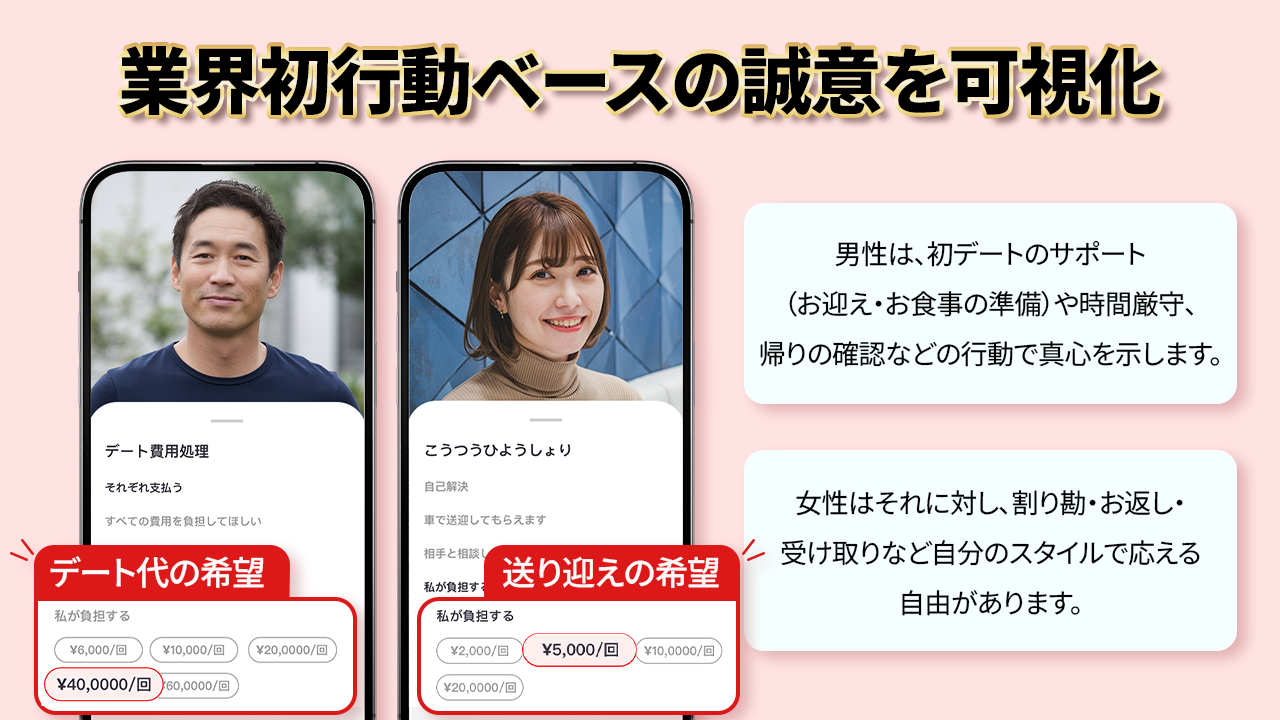
When a relationship flows into inertia, gratitude and praise tend to become "set phrases". Breaking this cycle involves "intentional care" with reasons attached. This aligns with the respectful practice of "balanced consideration" valued within the Yoitoki community (for example, the idea that a man showing consideration for transportation costs or meal expenses on a first date is a sign of respect, not an unidirectional obligation).
- Concrete strategy: Instead of a routine "thank you for your hard work", say something specific like, "I heard you had a big presentation today. You must have been nervous, but you did great. I respect you." Instead of "thanks for always helping", say, "Today, because you took out the trash, I was able to prepare slowly. It really helped me. Thank you." Connect the action with the impact it had.
4. When gaps still cannot be filled: The option of "respectful separation"
Not all relationships develop through repair or rebuilding. No matter how sincerely you engage in dialogue, there may be fundamental gaps in values (for example, whether to prioritize consistent honesty or the freedom of the relationship) or intentions toward the relationship. In such cases, what can be said from the perspective of Yoitoki's emphasis on "Quality & Safety" is that "the risk of staying in a toxic relationship is always greater than the courage to choose self-respect and open the path to a healthy future relationship."
Assess whether the continuation of the relationship contradicts "mutual respect"
Calmly reflect on whether continuing the relationship is creating the following conditions.
- Example: A pervasive sense of distrust where one constantly monitors the other. Due to fears of cheating, limiting the other person's friendships and actions becomes "normal". Being together out of habit or fear rather than genuine desire. These are states that greatly deviate from mutual respect and emotional equality.
Separation as a sincere choice – Viewing it as an investment in better future relationships
A paradigm shift is necessary: "Breaking up is not a failure". Instead of clinging to a relationship with incompatible values and desires, reframe the energy spent depleting each other as an "investment" in personal growth and time to seek a truly compatible partner.
- Example: Choosing the path of deepening self-understanding over one year rather than staying for ten years in an unstable relationship marked by repeated dishonesty, and seeking a partner with shared fundamental values on a platform with clear intent like Yoitoki. This is a sincere choice for oneself and a future partner.
Conclusion: The feeling of "I want to cheat" and the true dialogue that begins from there
The feeling of "I want to cheat" can be reframed not as a personal "evil", but as a "sign of pain seeking growth" emitted by the relationship itself. Whether it ends in suspicion or a game of control and submission, or becomes a springboard toward mutual understanding and deeper trust, depends on the choices of both individuals and their intentional efforts.
A truly fulfilling relationship is not about two people perfectly matching but involves having the will to engage in respectful dialogue and grow together when facing discrepancies and difficulties. We are convinced that such relationships begin from a place of intentional meeting where both parties deeply understand and respect each other's values and visions for the relationship.
If you're tired of superficial connections and exhausting games, and are seriously looking for a partner who resonates at a fundamental level and can face difficulties together, take a look at how Yoitoki's "Kokoromusubi" approach can support that first step.
Shall we start a new form of meeting?
If you're tired of ambiguous relationships and seek connections built on mutual effort and true understanding, your place is here.
💖 Join Yoitoki now and meet people who share the same feelings.