A French man and a Japanese woman who were friends for six years before they became a couple. From their first-hand experience, we look at the misunderstandings that come up in international relationships and at how to talk through the differences.
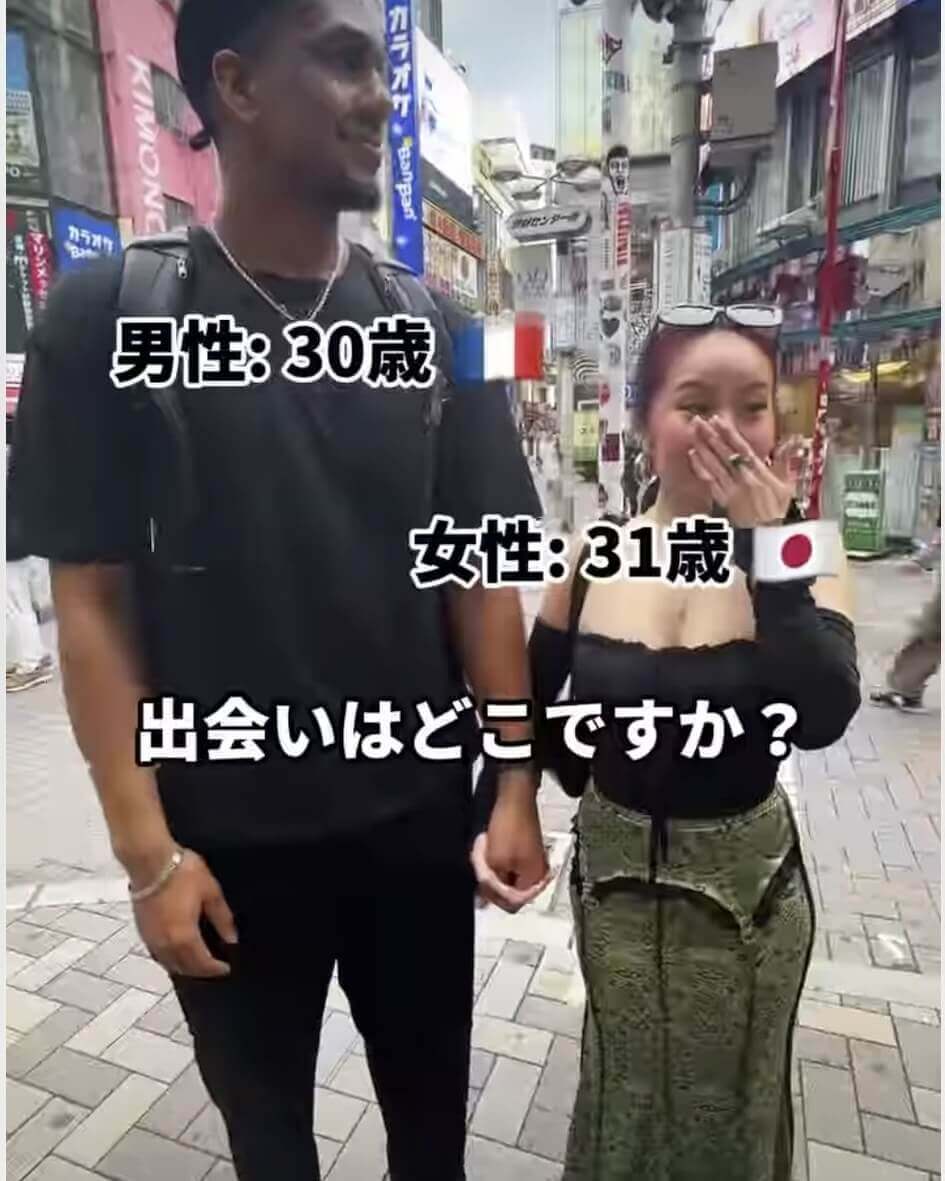
We met the couple in Fukuoka and asked how they went from friends to partners, about cultural differences, and about the communication that holds their relationship together.
The two met in Fukuoka and spent a long time as close as siblings, almost like family. One confession did not turn it into romance; later, after the woman met the man's family, she gradually began to see him as a partner.
This is not a story about international relationships needing some special method. Konkatsu is the Japanese term for actively looking for a marriage partner, but the basics here are no different: taking time to know someone, putting differences into words, building trust. Any couple can take something from that, whatever nationality they are.
There is no such thing as friendship between men and women, right?
Some people only date foreigners, right? It is a language-and-environment thing, you see it a lot.
These are examples of how viewers responded to the Instagram post, reproduced with the original meaning intact.
What comes through in their story is not erasing cultural differences, but building a relationship where you can talk about what is different. The man names 'Communication, Trust, Reciprocity' as his three pillars, and the woman talks about how important it is to talk about everything. It is one couple's experience, but it makes you think about what it means to check the other person's intent when you feel a gap opening up.
Interviewer: Um, where did you two meet?
Woman: Where we met - um, we came from Fukuoka, and, um, he was a customer at the shop where I worked part-time.
Interviewer: That is lovely. By the way, where was the part-time job?
Woman: Wh- where I worked... it was ages ago, six years back, um, at a karaage place, a fried chicken shop. It is terrifying, ha. So, um, they call me the chicken girl.
Interviewer: Why do you like fried chicken so much?
Man: Why? Because it is delicious, because I love chicken. Yeah, I love chicken, that's it. There is no big reason, I just like it. And karaage is such a Japanese food, you know. So, yeah, that is why I like it.
Interviewer: What made you want to start dating?
Woman: What made me? Actually, about two or three years ago, well two years ago, he confessed once, but at first we were close friends for six years.
Man: We were friends for four years.
Woman: We met six years ago, and it was really like siblings, total close friends, all 'Hey bro!' like that. Once I became a girl friend, our friends got close too, all 'Hey sister!', we were always super close. About two years ago he confessed once, and it was like 'Yo bro! We are family!', ha. Wait, this is embarrassing. But after that, when I met his mum instead, here in Japan, I had this sort of 'Wow' moment.
Woman: So then I thought, 'I like him', and then he thought 'I like her' too. Well, naturally. The second time just happened naturally.
Man: Yeah, like the wind, just whoosh. Like the wind and a leaf drifting along together, it was that kind of feeling.
Man: She trusts me.
Interviewer: Tell us what you like about her.
Man: My goodness, hahaha. Um, looks or personality? Ah, there is too much to say. Her smile, her hair, her face, her figure, and her kindness too. She is small... ah, she is really kind, so international and friendly. And not so... you know, Japanese girls are very, how do I put it, conservative, right? Yeah, conservative, exactly. But she is different. So being with someone so open-minded is a really good thing. She carries so many different cultures, she is a multicultural person.
Interviewer: You really adore her, don't you.
Woman: What I like about him... he is a really unique person, well, kind, and super funny too. When I have a cold or I am ill, he takes such good care of me. Sometimes he surprises me with a dessert, or makes a cake, or cooks a meal. He is especially very tall, so it feels like he is right in front of me. It feels, I don't know, manly. That is the kind of thing.
Interviewer: Do you run into problems with cultural differences?
Woman: There are, definitely. I am 100% Japanese and he is 100% French, so of course there is a language barrier. And, like, we live together now so it is fine, but if this were long-distance it would be harder. I think communication is what matters above everything. Communication.
Woman: Yeah, there is culture shock too, all sorts of it. Things that are normal in Japan, in his country they are like 'we do not do that', that kind of thing.
Man: Hmm, French culture is fairly strong in me, I am genuinely proud of it. So there are things I see in Japan that I do not want to do. From my side it becomes, that is the Japanese way, I am French, we do not do that in France, so I will not. But in practice it is a middle ground, most of the time I follow Japanese culture. Only on very small, odd points, honestly, I sometimes do not. Ah, do not ask for examples, ha. For instance, work - I used to work in service at a luxury hotel, and there are moments when you have to bow, or apologise, right? I am bad at that. I am tall, I cannot bend at the waist and bow for them. I will not go that far. Though I do it a little, I go, 'sorry, sorry', like that. See, you bend at the waist like this, right? And I am like, no, I am not doing that. It is a small example. But culture shock specific to dating? I do not really feel it when it comes to dating... ah, you have something, go on, say it.
Man: Yeah, I do not expect... look, sometimes, as you say, when I put things this directly, I do not want to hurt her. Because it is the truth. I want to say the truth, but I do not want to water it down into, 'well, that is just how it is'. But when I say it... well, that is just how it is.
Woman: But then, as a couple, I might go, 'eh?', but we talk there, we communicate, and I understand, 'that is not what I meant'. So really, communication. Talk, talk, talk, everything.
Man: Yeah, exactly. A good relationship, anywhere in the world, whatever the other person's nationality, comes down to three pillars. Those are communication, trust, and sometimes reciprocity, giving to each other. With those three, nationality does not matter. Any two people can make it work. Yeah, sure. Hahaha. Kiss, ah.
This is a transcript of the video. Some phrasing has been tidied up for publication.
'Friendship between men and women' and 'what leads someone into an international relationship'. Using two different reactions in the comments as a starting point, we think about how relationships begin without turning this couple's experience into a single right answer.
There is no such thing as friendship between men and women, right?
This comment takes a straight, sceptical position on whether men and women can be friends at all. This couple, on the other hand, spent about six years as close friends like siblings, and then the relationship changed. Neither one is an answer that fits everyone.
When a friendship turns romantic, and what friendship even means, differ from person to person. What matters is not squeezing the two of you into someone else's template of what friends or a couple should be, but checking what kind of relationship you both want.
A long friendship can be a foundation of trust, but on its own it does not guarantee that romance will work. Rather than assuming how the other person feels, putting any change into words and sharing it is what leads to the next step.
Some people only date foreigners, right? It is a language-and-environment thing, you see it a lot.
This comment sees international relationships not just as personal preference but as something shaped by language ability and daily surroundings. Where you study, work, live and who your friends are - the more chances you have to meet people from different backgrounds, the more ordinary an international relationship can feel.
But the setting alone cannot explain someone's motives. This couple met in Fukuoka, built a long friendship and then started dating. The centre of the story is not 'because he is foreign' but the process of getting to know the person in front of you.
An international environment widens the doorway to meeting people. Whether you keep the relationship going after that is shaped by each other's character, trust and the time you can share.
The comments here are examples of the many reactions from Instagram viewers. They do not represent the official view of the Yoitoki Editorial Team. We include them as material for thinking about the point each comment raises, without deciding anyone's personal motives.
In an international relationship, differences in language, culture and values can leave you feeling you cannot read the other person. But having differences does not by itself make a relationship hard. The French man and Japanese woman here feel the cultural gaps between them, and say that talking about everything is what they value.
They met in Fukuoka and spent about six years as close friends like siblings. One confession did not lead to dating; after the woman met the man's family, among other things, the relationship shifted little by little. There is no single way for an international relationship to begin, and this is one example of a couple building things at their own pace.
Even when a conversation holds together, a joke, an indirect way of saying something, or the meaning of a silence may not land the same way for both of you. Especially when feelings are running high, it helps to ask what the other person meant before deciding a short reply means they are angry or have gone cold.
In the interview the woman named the way he cares for her when she is unwell, and the meals and desserts he cooks, as what she likes about him. Some people put affection into words, others show it through actions. What matters is not judging only by the form you find easiest to receive, but also learning how the other person expresses it.
They say they sometimes notice gaps like what is normal in Japan is not necessarily normal in France. At the same time, nationality alone cannot explain someone's character or way of thinking. Japanese dating culture is a useful starting point, but it is only part of the picture - keep asking the person in front of you. Both are where reducing misunderstandings in an international relationship begins.
The man named communication, trust and reciprocity, or consideration, as what a good relationship needs. A conversation should not end once feelings are shared; taking it as far as agreeing together what to do next - send a quick message when busy, check a phrase you do not understand - makes the same misunderstanding less likely to repeat.
Using this couple's experience as a starting point, here are the questions people often ask about international relationships.
It is not only differences in culture or language. Misunderstandings often come from reading the other person through your own sense of normal without checking what they meant. Talk things through in concrete situations, such as how often you message or how you show affection.
Even when you understand the words, the nuance in a joke, an indirect phrase or a tone of voice can be hard to read. Check by asking whether you have the meaning right, and do not jump to a conclusion while something is still unclear.
Affection, public displays of affection, how you keep in touch, distance from family, food and daily habits - differences show up across everyday life. What matters is not to assume someone's views from their nationality, but to ask the person directly.
A long friendship alone does not guarantee that a relationship will last. On the other hand, getting to know someone's personality and way of thinking before dating can give a couple a sense of security. This couple dated after about six years of friendship.
This couple points to communication, trust, reciprocity and consideration. Rather than trying to erase the differences, talking openly and looking together for a way that suits you both is one foundation that holds a relationship up.
Rather than lumping Japanese and French culture together or putting one above the other, check what is actually different between the two of you. Their experience speaks to something that matters in any relationship, not just international ones: the value of trying to learn what the other person takes for granted.
The woman named talking about everything, and the man named 'Communication, Trust, Reciprocity'. When you feel a gap, explaining the other person by their nationality is not the starting point; asking what they actually feel and think is what makes the misunderstanding smaller.
Not to change the other person, but to find a way you are both comfortable. Here is the approach this couple described, turned into everyday conversation.

For phrases that can be read two ways, like 'I am fine' or 'another time', check the intent there and then. Do not judge from the translation alone.

Notice the actions the other person uses to show care - words, messages, looking after you when ill, cooking - and share the ways you like to receive it too.

Do not ask one person to do all the adapting. Separate what each of you can adjust from what you want to hold on to, and talk both through.
First-hand interviews with people who grew up in different places, and how they see relationships.
There is no need to feel nervous.
Yoitoki supports you in finding something serious.