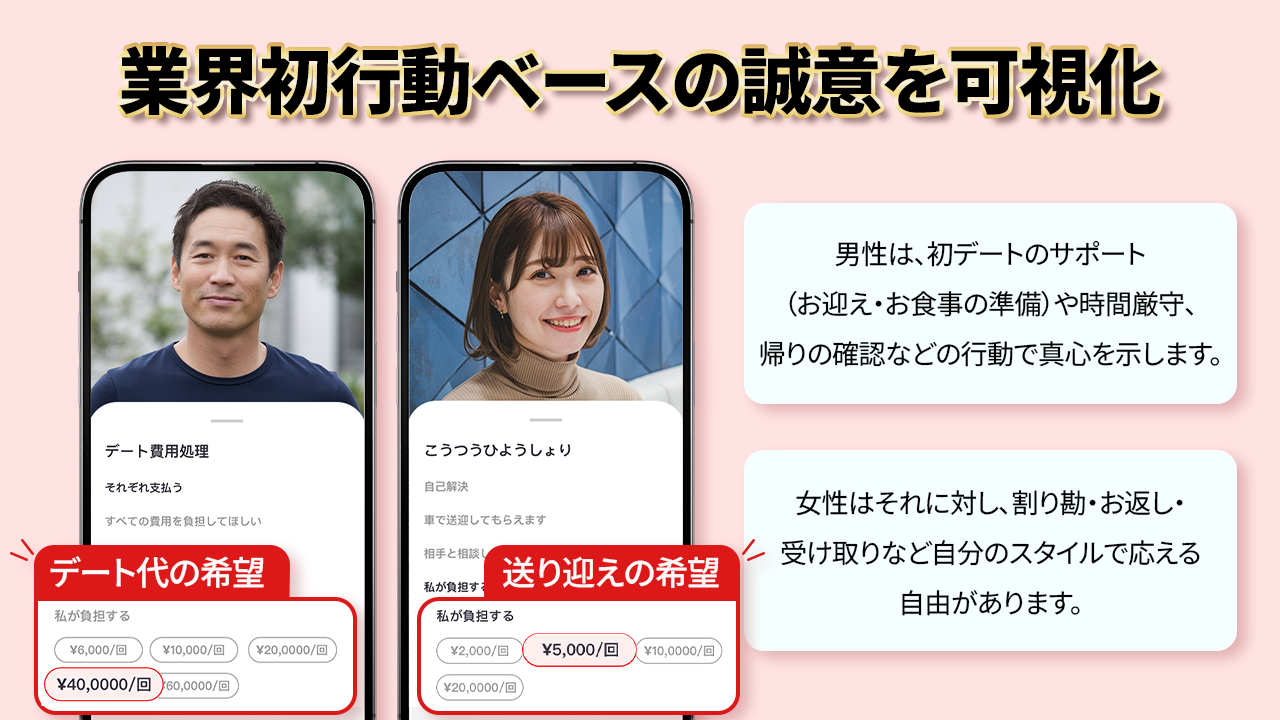

Let's stop the one-sided approach. In Shin-Okubo, a way to meet that respects each other's values
“I met someone at a lively store in Shin-Okubo and exchanged messages a few times, but the conversation didn't continue, and I was frustrated not knowing the other person's true feelings...”. Have you ever had such an experience? Shin-Okubo, filled with K-POP culture, makes you feel the potential of Shin Okubo encounters through its very energy. However, it is precisely in the midst of this excitement that we tend to lose sight of the most important thing: the “quality” of relationships.
There are many “date spot guides” out there. However, they often end up being just lists of “places” and “methods,” leaving behind your own “intent” of “what kind of relationship you want to build.” Relationships that progress without a clear intent can lead to misunderstandings and frustration, wearing down the heart. In this article, we will propose ways to utilize the diverse stage of Shin-Okubo to not just “gain encounters,” but to start “relationships where we can acknowledge and grow together with each other's values.” We will convey specific perspectives and methodologies to clarify your own “intent” regarding love and build a foundation of “mutual understanding” with the other person.

Table of Contents
- Before meeting in Shin-Okubo: 3 steps to articulate your “intent for love”
- How to enhance the quality of relationships by utilizing “intentional” spots in Shin-Okubo
- Beyond encounters: Conversation techniques to make the first date a “time for mutual understanding”
- FAQ Section
- Conclusion: From coincidence to inevitability. Relationships designed by intent in Shin-Okubo
- Shall we start a new form of encounter?
Before meeting in Shin-Okubo: 3 steps to articulate your “intent for love”
Before stepping into Shin-Okubo, take a moment to face yourself. The scenery may change, and encounters may change, but what must first change is how you face your own “intent.” Even when meeting friends at a café, you would check the time and place. In a more complex and important human relationship like love, starting without sharing a destination or goal can lead to confusion.
One of the philosophies that Yoitoki values most is “Clarity of Intent.” This is the attitude of verbalizing your own vision for relationships and seeking a partner who can respect that. It is the first step to shift the paradigm from “just starting love” to “starting to build it with intent.”
Step 1: Separate “fun” from “expectations for the relationship”
The desire to “have a good time in Shin-Okubo” and the wish to “find a long-term partner there” are completely different dimensions. First, be honest with yourself. What you are seeking now is an interaction with friends who enjoy the culture or the experience of temporary encounters filled with new stimulation? Or is it exploring the possibility of walking into the future with someone who shares common hobbies while aligning values? There is no right or wrong answer. What’s important is whether you can make this distinction within yourself. If this self-understanding is vague, it can lead to misunderstandings with the other person's intent, potentially hurting both parties. Articulating what you “want” is itself drawing the “blueprint of the relationship,” as Yoitoki describes.
Step 2: View Shin-Okubo's “culture” as a tool for building relationships
The greatest charm of Shin-Okubo is undoubtedly its rich Korean and K-POP culture. However, it would be a waste to let this end up as just a “trigger.” What we want here is a perspective that delves into the other person's “inner self” through the tool of “culture.” For example, the K-POP song playing in the background of the café you visit together. If you only confirm, “Do you know this song?” the conversation ends there. Take a step further and ask, “What do you like about this song?” or “What attitude of this artist resonates with you?” What becomes visible from there is what that person seeks in music (healing, energy, empathy, admiration) and perhaps a glimpse of their emotional richness and values. Shared interests are the most natural and rich entry point to learn about each other's “feelings” and “thought processes,” not just superficial conversations.
Step 3: Set “mutual rules” prioritizing safety and respect
Even if you hit it off and have a great time, what should not be forgotten is “mutual respect.” Given the lively atmosphere, it can be easy to get carried away and overlook personal boundaries. Ideally, before or at the early stages of dating, it’s best to articulate and confirm things verbally rather than relying on unspoken understanding. “If we’re going to be late returning, shall we let each other know?” “Next time we meet, a quieter place would be nice.” This is not a “rule” that confines the other person, but an act of creating a “common foundation” where both can feel comfortable and safe. This is also the reason why Yoitoki's community emphasizes safety. Healthy relationships start with mutual comfort.

How to enhance the quality of relationships by utilizing “intentional” spots in Shin-Okubo
The place determines the quality of the time spent there. Shin-Okubo has not only vibrant streets but also “intentional” spots that can elevate the quality of relationships. The choice of “where to go” itself sends a message of “what kind of relationship you are seeking.” If what you desire is deep dialogue and mutual understanding, choose places that will support that from the environment. This is the specific first step of “mutual effort” proposed by Yoitoki. Both parties focusing on creating an environment where they feel comfortable and can share their true selves is what lays the foundation for a serious relationship.
Category A: “Calm adult bars” where you can focus on conversation and learn about each other's backgrounds
There are many hidden bars in quiet alleys or upper floors of buildings away from the hustle and bustle of Shin-Okubo. For example, a wine bar with a calm interior or a bar that serves crafted cocktails. The features of such places are that the music plays quietly as background, the lighting is not too dark, and the table arrangement allows for focused conversation. The goal here is not to “get excited” but to “listen and understand.” To listen to the background stories such as the other person's views on work, relationships with family, and the journey they have walked so far, a moderate quietness and sense of security are necessary. Bars with gentle decor and lighting naturally soften the tone of conversation, providing time to delve deeply into the other person's “character.” This can be considered the ideal environment for aligning the deeper parts of values with someone whose intent is clear.
Category B: “Cultural transmission spots” that share common passions and create a natural sense of solidarity
If you want to immerse yourself in the core of Shin-Okubo's K-POP culture, choose “cultural transmission” spots rather than just merchandise shops. For example, pop-up shops for specific artists, K-POP dance experience events, or small cinemas showing Korean indie films. The greatest advantage here is the natural sense of unity that arises from “sharing passions.” When people are equally enthusiastic, there is little sense of a barrier in conversation, even with first-time encounters, allowing for a pure sharing of feelings of “liking.” What’s important is to explore what lies behind that “liking.” Questions like “What attracts you to this artist?” or “Which scene in this movie moved you?” open the door to touch upon the reasons behind their hobbies, namely their sensitivities, aesthetic sense, and cherished emotions. It tests the attitude of “distinguishing the essence of the other person through cultural understanding” rather than being superficial “fans.”
Category C: “Shared dining” that fosters cooperation and consideration
Choosing a restaurant hints at the direction of the relationship. There is a completely different atmosphere between places where you silently eat individual meals and those where you gather around large pancakes or budae jjigae and share. The latter, “shared dining,” provides a natural setting for practicing the essence of partnership: “mutual effort” and “consideration.” “Shall we add this ingredient?” “Is this level of spiciness okay?” “This one is cooked better.” In such casual exchanges and collaborative actions, the essence of a relationship becomes visible. It is not about one-sided service or support, but an equal cooperative relationship where you “create and enjoy something together.” Yoitoki believes that the “mutual effort” is not an extravagant thing but starts from the accumulation of these everyday small considerations.
💡 Yoitoki Insight: Beyond Algorithms
The challenges you face are precisely the reason we developed “Kokoromusubi.” While other apps match on superficial features, our AI detects “deep compatibility,” such as how one deals with stress, shows compassion, and shares values.
👉 Find true compatibility with Yoitoki →

Beyond encounters: Conversation techniques to make the first date a “time for mutual understanding”
Once you’ve chosen the place and shared your intent, it’s time to enhance the quality of “time.” Many first dates tend to turn into “interviews” where both parties pull out information or competitions of showcasing hobbies. Let’s take it a step further and turn that time into an opportunity to nurture “mutual understanding” and “emotional connection.” The “Emotional Equality” that Yoitoki aims for does not merely mean equality of roles; it signifies a relationship where both parties show equal interest in each other's inner worlds, exchanging words and feelings with equal respect. Here, we will share specific conversational techniques for this.
Avoid “interview questions” and embrace “future-oriented questions”
What to avoid are fact-checking questions that resemble a resume. “Where are you from? (→ Can we bond over local topics?)” “What do you do? (→ What’s your social status?)” “What’s your income? (→ What’s your economic power?)” These strengthen the perspective of viewing the other person as a collection of “conditions” and rob opportunities to know their depth as a person. Instead, we suggest questions that touch on “future perspectives” and “values.”
- “What’s your memory of the first time you ate this dish?” (→ Past experiences and sensitivities)
- “If you could take a month off, where would you like to go and what would you like to do?” (→ Dreams, adventurous spirit, priorities)
- “Have you recently been moved by anything or had an eye-opening experience?” (→ Things that touch your heart, thought patterns)
- “In the future, what would you like to challenge together?” (→ Aligning visions for the relationship) These questions shine a light on the other person's “thinking,” “feeling,” and “living.” The deep psychology and values analyzed by Yoitoki’s “Kokoromusubi AI” lie exactly in the world beyond these questions.
Be aware of the balance between “listening” and “talking” - practicing “emotional equality”
Continuously bombarding with questions or filling the time with your own stories both create “inequality.” The ideal is a dialogue that resembles a game of catch. Show empathy for what the other person has shared (“I totally understand. I’ve had a similar experience...”) and share similar experiences or thoughts in equal measure. By naturally weaving in prompts like “What do you think?” the dialogue becomes a space for mutual value disclosure. This sense of balance is not merely a conversational technique; it is an attitude of respecting the other as an equal partner. If this attitude is upheld from the first date, it can be said that the relationship begins to be built on a healthy foundation right from the start.
Utilize the “cultural awareness” unique to Shin-Okubo as a conversation starter
If you want to make the best use of the place called Shin-Okubo, the whole area becomes material for conversation. The music playing in the store, the posters on the walls, the items on the menu. Use these not just as a background but as windows into the other person’s inner self.
- “Is this music popular in your hometown? Or did you discover it here?” (→ Cultural background, how you met)
- “I particularly love the worldview of the lyrics from this poster’s artist... What song do you like?” (→ Interpretation of art, shared values)
- “Is this dish close to your home cooking? Or is it a new discovery?” (→ Family views, adventurous spirit) Such questions allow you to naturally grasp the atmosphere of the place while deeply entering into the other person's personal history and sensibilities. Conversations that link the place and personal stories create unforgettable special moments.

FAQ Section
Q1: Is the probability of meeting someone who wants a serious relationship in Shin-Okubo high?
A: The place itself does not determine people’s intents. Various people visit Shin-Okubo with different intents. What’s important is that you communicate your own “seriousness” honestly and engage in communication to discern partners with similarly clear intentions. On platforms like Yoitoki, you can explicitly state your intent for relationships in your profile from the beginning, allowing you to meet people whose visions for relationships match during the matching stage, thereby preventing wasted time and emotions.
Q2: Is there a possibility of deeply connecting with Japanese people who are knowledgeable about Koreans and Korean culture?
A: Interest in culture is a wonderful catalyst for encounters and generates common topics. However, the foundation for long-term and deep relationships is not simply “shared hobbies,” but rather the alignment of fundamental values (honesty, family views, priorities in life, how to face difficulties, etc.) that support those hobbies. It’s the key to building deep relationships that involves not just being superficial culture enthusiasts but distinguishing the essence of the other person through cultural understanding. Yoitoki’s “Kokoromusubi AI” indeed focuses on matching based on this alignment of fundamental values.
Q3: Is it advantageous to write “residing in Shin-Okubo” on matching apps?
A: Being geographically close certainly has the advantage of making it easier to meet in person. However, what’s even more effective is to include the background or feelings about “why you love Shin-Okubo” (e.g. “It’s exciting to experience diverse cultures,” “I love finding cozy hideaways amidst the liveliness,” “I admire a café that was the setting for a certain Korean drama”). This conveys your values, sensitivities, and lifestyle beyond just geographical information. This aligns with Yoitoki's matching philosophy, which emphasizes “compatibility as a person” rather than simply location.
Q4: Isn’t it rude to talk to strangers in restaurants?
A: The premise is to “read the other person’s situation and not impose,” emphasizing “respect.” Start from natural prompts (light questions about the menu, comments on the music in the store), and carefully observe the other person’s reactions to confirm whether there’s clear consent to continue the conversation (nods, smiles, responses to questions). This distinguishes it from “pickup,” which requires a fundamentally different, respectful, and equal attitude compared to simply demanding self-disclosure or persistently continuing to talk.
Q5: I feel anxious about sudden group dates or dating sites. What are more natural ways to get to know someone?
A: The desire for a “natural flow” is a healthy reflection of valuing the quality of relationships. Thus, participating continuously in communities with shared hobbies is the most effective. Places where you can deepen hobbies, such as Korean language classes, Korean cooking classes, or K-POP dance circles, allow you to spend time building normal interactions and naturally become close to those you resonate with. This avoids vague contacts with an unspecified number of people and is fundamentally aligned with Yoitoki’s approach of confirming value alignment before encounters and nurturing relationships naturally.

Conclusion: From coincidence to inevitability. Relationships designed by intent in Shin-Okubo
Shin Okubo encounters are not just a “place where encounters might happen.” It is a rich and diverse stage for clarifying your own “intent for love” and trying a new form of relationship based on “mutual understanding” with a partner who can share that. Every casually chosen location and every seemingly trivial conversation shapes the quality of the relationship you seek. Deep dialogues in a quiet bar, sharing passions at an enthusiastic event, casual considerations around the dining table—these accumulations of choices lead not to mere coincidence but to a “necessary” relationship that you and your partner have intentionally designed. A relationship where intents are clear and both can respect each other's values transcends temporary “fun times,” nurturing each other as individuals and providing deep richness and security that forms the foundation of life. The hustle and bustle of Shin-Okubo and the heat of the culture are merely colorful backgrounds for nurturing such relationships. The protagonists are always you and the other person, engaging with clear “intent.”
Shall we start a new form of encounter?
For those who are tired of ambiguous relationships. If you are seeking connections built on mutual efforts and true understanding, your place is here.
💖 Join Yoitoki now and meet people who share your sentiments.