

yoitoki logo
For those seeking genuine encounters in Nakano: A pathway to a serious relationship starting from "pick-up" methods.

For those seeking genuine encounters in Nakano: A pathway to a serious relationship starting from "pick-up" methods.

icon-dateJanuary 6, 2026
立刻加入吧
开启你的高端专属约会之旅
精英圈层,真实高质,时间与魅力的完美交换
请输入您的电话号码
免费注册
※未满18岁不可注册
邮箱注册
也可以通过下载App进行注册或登录
app storegoogle play

For You Who Are Searching for Genuine Encounters in Nakano: The Path to a Serious Relationship Beginning with "Pick-Up"

In the vibrant streets of Nakano, you muster up the courage to approach and exchange contact details. However, the subsequent messages are slow to reply, and the intentions are unclear… “Will it end up being just a superficial conversation relationship?” Have you ever felt that emptiness? Many people find success in the act of "Nakano Pick-Up", but struggle with the challenges of "building a relationship" afterward.

Japan's Nakano Pick-Up Relationship - Moments of True Connection

Traditional "Nakano Pick-Up" guides often focus on spot information and initial techniques. However, it’s not just about “where” and “how to approach,” but also about “who” and “what kind of relationship you want to build,” which are the essential aspects that are often overlooked, resulting in misunderstandings and frustration.

In this article, based on Yoitoki's philosophy of “Professionally Guided, Emotionally Equal”, I will explain how to position encounters in Nakano not merely as a “chance” but as the beginning of a relationship based on mutual respect and clear intentions. From choosing the right place to conversation techniques for first encounters, to the subsequent relationship building, if you are seeking a serious partnership, I will introduce the thoughts and practices you should know.

Table of Contents

1. Start with Choosing the Right Place for "Intentional Encounters": Characteristics of the Nakano Area and the People You Truly Want to Meet

The success of pick-up starts even before the first word is spoken. It is not merely about choosing a “busy place.” The starting point is to determine whether there is potential compatibility between the quality of the relationship you seek and the values and lifestyles of the people gathered there. In the diverse city of Nakano, this “environmental reading ability” carries even more significance.

North Exit, South Exit, and Sunmall: Hints About the Other Person’s Values from the Area's "Air"

Nakano has several different “faces” centered around the station. The cultural backgrounds each area emanates reflect the interests and daily lives of the people who gather there.

  • North Exit (Surrounding Subculture and Anime Area): This is a place where people who deeply pursue creativity and hobbies gather. There tends to be many individuals who have a deep love for specific works or cultures and cherish their own worlds. Encounters here are likely to revolve around shared passions as important connections. It is key to understand each other’s enthusiasm for what you both “love”, rather than just superficial conversations.
  • South Exit (Business District/Office Area): In the evenings, working professionals returning from their jobs are prominent. They are freed from daytime mode and seek relaxation. Their values often stem from a realistic sense of life and awareness of their careers. Conversations naturally evolve into topics rooted in real life, such as work-life balance or ways to unwind in daily life.
  • Sunmall Shopping Street (A Lively and Down-to-Earth Area): There is a vibrancy rooted in local life here. People who prefer unpretentious, open communication and have a strong sense of community gather. Conversations here can start more casually and with less formality, likely expanding into discussions about local pride and small joys of daily life.

What's important is not to apply these tendencies as “stereotypes,” but to use them as a starting point for observation. Just as Yoitoki's "Heart Binding AI" analyzes the inner values behind profiles, observing what kind of environment people choose for themselves in the real world is the first step in exploring “Deep Compatibility.”

Criteria for Choosing a Place Not Just a "Dating Spot" but a "Place Where Conversations Emerge"

Even in selecting specific establishments, a strategic perspective is required. Choose a place suitable for your purpose—namely, “the beginning of natural and deep conversations”—rather than a stylish bar that looks good on Instagram.

  • Seating Arrangement: Counter seats or table seats that allow for moderate distance facing each other are ideal for starting conversations with new people. In contrast, large sofa seats or overly private spaces may create either too much closeness or an overly spread-out conversation.
  • BGM and Noise Level: If the music is too loud, it becomes stressful for conversation. However, being too quiet also induces tension. A place with moderate background noise is said to have a relaxing psychological effect, promoting natural conversation.
  • Brightness of Lighting: Extremely dark establishments can make non-verbal cues (facial expressions, nods) hard to read, leading to distrust. Adequate brightness creates an environment where both parties can comfortably read each other’s expressions and advance the conversation.

Thus, the act of choosing a place itself demonstrates your “intent.” It is not just about seeking “the possibility of encounters”, but rather a choice based on mutual respect that “in this place, we can have proper conversations and understand each other.”

What Time of Day Means: Appropriate Approaches for Evening Professionals and Night Owls

The time of day greatly influences the “psychological states” of the people present.

  • Early Evening to Night (Around 6 PM to 9 PM): This is a “release mode” after finishing work or errands. There is energy, but thoughts of tomorrow linger in the back of the mind, making moderate-length conversations and modest commitments that lead to the next day suitable. Approaches tend to favor a fresh and low-pressure impression.
  • Night to Late Night (After 9 PM): This shifts into “exploratory mode” or “immersive mode” for enjoying more private time. People interested in hobbies or deep discussions gather, and conversations have the potential to develop over time. However, it is essential to be considerate of the other person’s home time and stamina, demonstrating “Emotional Equality.”

Japan's Contemporary Nakano Pick-Up Relationship

Reading and respecting the other person’s temporal and psychological context is the first step in demonstrating the “Mutual Effort” that Yoitoki advocates. Rather than imposing your own convenience or desires, the attitude of imagining the situation the other person is in and seeking a comfortable way to engage within it builds the foundation of trust.

2. Building a Good Impression from the First Word: Conversation Techniques to Transform "Pick-Up" into a Natural Beginning of Human Relationships

Once you’ve selected the place and time, the next step is the actual engagement. The crucial point is not to perceive “pick-up” as a non-symmetrical space where one party judges and the other performs. What Yoitoki envisions is a series of equal dialogues starting from the first word.

From "Cliché Lines" to "Shared Situations": How to Break Down Barriers and Start Equal Conversations

There’s nothing wrong with the cliché line, “Excuse me, may I talk to you?” However, this essentially comes off as a request for permission, “I’m about to invade your time and space.” Many people feel a psychological hurdle against this.

Instead, I propose a “situation-sharing” approach. This means naturally commenting on the “situation” you and the other person are both sharing at that moment.

  • Example 1 (at a café): “That cake looks delicious. Is it a popular menu item here?” (Focusing on what the other person ordered)
  • Example 2 (at a bookstore): “I’ve recently become interested in that genre too… Do you have any recommendations?” (Referring to the other person’s area of interest)
  • Example 3 (at a bar): “The background music here has a great selection. The owner's taste really shines.” (Evaluating the shared environment)

The advantage of this approach is that the focus of the topic is on the "shared situation" rather than the "individual person." This way, the other person is less likely to feel pressured by being evaluated personally and can participate in the conversation more relaxedly. This leads to the psychological safety necessary for the beginning of an equal relationship.

Listening Skills Build Trust: Techniques to Show Empathy Rather Than Asking Questions Out of Curiosity

After you initiate a conversation, the most important thing is not to “ask questions” but to “listen.” However, it’s not just about listening passively; the attitude of “Active Listening” is required.

  • Questions to Avoid: “What do you do for work?” “Where are you from?” (So-called “interview questions” that tend to categorize the other person)
  • Recommended Approach: Ask questions that touch on the other person’s inner self and values, starting from what they first talked about.
    • If the other person says, “I love traveling” → “What do you find appealing about travel? Is it more about the scenery or meeting people?” (Exploring values)
    • If the other person says, “I’ve been really into reading lately” → “When you choose a book, do you feel drawn to something about it more than the cover or its reputation?” (Knowing their criteria for selection)

This kind of conversation may seem like mere information exchange, but it actually touches on the other person's perceptions, feelings, and value judgments, which are very personal aspects. The “deep compatibility” Yoitoki's “Heart Binding AI” analyzes is based on these inner characteristics. Whether you can reach this level on a first meeting depends on your “listening skills.”

While listening, show your intention to "truly understand what you are saying" through techniques like nodding, summarizing the other person's words (e.g., “So, what’s important to you is ___”), and so on.

Balancing Self-Disclosure: Show Your Authenticity as an Equivalent Exchange, Not a One-Sided Self-Promotion

Good conversations cannot be one-sided. It is a process of “weaving together” where you not only “draw out” something from the other person but also disclose yourself equivalently.

  • Not Recommended: One-sidedly talking about your background or boasting in “self-promotion mode.”
  • Recommended: After receiving the other person's story, share your small episodes or thoughts related to the same theme in “equivalent exchange mode.”
    • If the other person says, “I cook to relieve stress from work” → “That sounds wonderful. I actually cook when I want to concentrate. It’s nice to be able to clear my mind. By the way, I’m currently trying to cook ___ dishes…” (Empathy + self-disclosure)
    • If the other person hints, “Sometimes I get tired from relationships” → “I understand. Sometimes trying to understand the other person's feelings drains me. I've been learning how to find balance lately.” (Empathy + sharing vulnerability)

This “equivalent exchange” is at the core of “Emotional Equality.” By demonstrating that you too are an imperfect, learning individual, you create an atmosphere where the other person can relax and speak openly. This is exactly the unadorned, genuine dialogue that begins with the first message after exchanging profiles on Yoitoki’s platform.

💡 Yoitoki Insights: Beyond Algorithms

The challenges you are facing are precisely why we developed "Kokoromusubi." While other apps match based on superficial characteristics, our AI discerns “deep compatibility” based on how you face stress, demonstrate empathy, and share values.

👉

Yoitoki 'Heart Binding' AI Matching Function

3. The "Real Start" After Exchanging Contact Information: Three Steps to Nurture Accidental Encounters into Solid Relationships

The moment you exchange contact information is actually the most crucial turning point. From here on, this is the phase where the true value of shifting an “accidental encounter” into “intentional relationship building” is tested. Many relationships get lost and fade away in the ambiguity of “what comes next.”

Same Day Follow-Up: Update Impressions with Gratefulness and Concrete Next Suggestions

Sending a simple message on the same day you part ways is fundamental. However, if the content is only “I had a great time. I’d like to see you again,” your impression remains fixed in the conversation.

  • Effective Follow-Up Examples:
    • “I really enjoyed talking today, especially your thoughts on ___ were eye-opening. Afterward, I thought a bit about it… (a brief mention of your own thoughts). I’d be happy if we could continue that conversation.”
    • “Thank you for earlier. I’ve already ordered the book you recommended! Please tell me your thoughts after you read it. Also, if you’re up for it, would you like to check out ___ (a shared interest from the conversation) together next time?”

The key points of this message are three:

  1. Specific appreciation (what was good)
  2. Sincere response to the conversation content (proof that you weren’t just letting it slide)
  3. Clear and light next suggestion (moving away from the abstraction of “I’d like to see you again”)

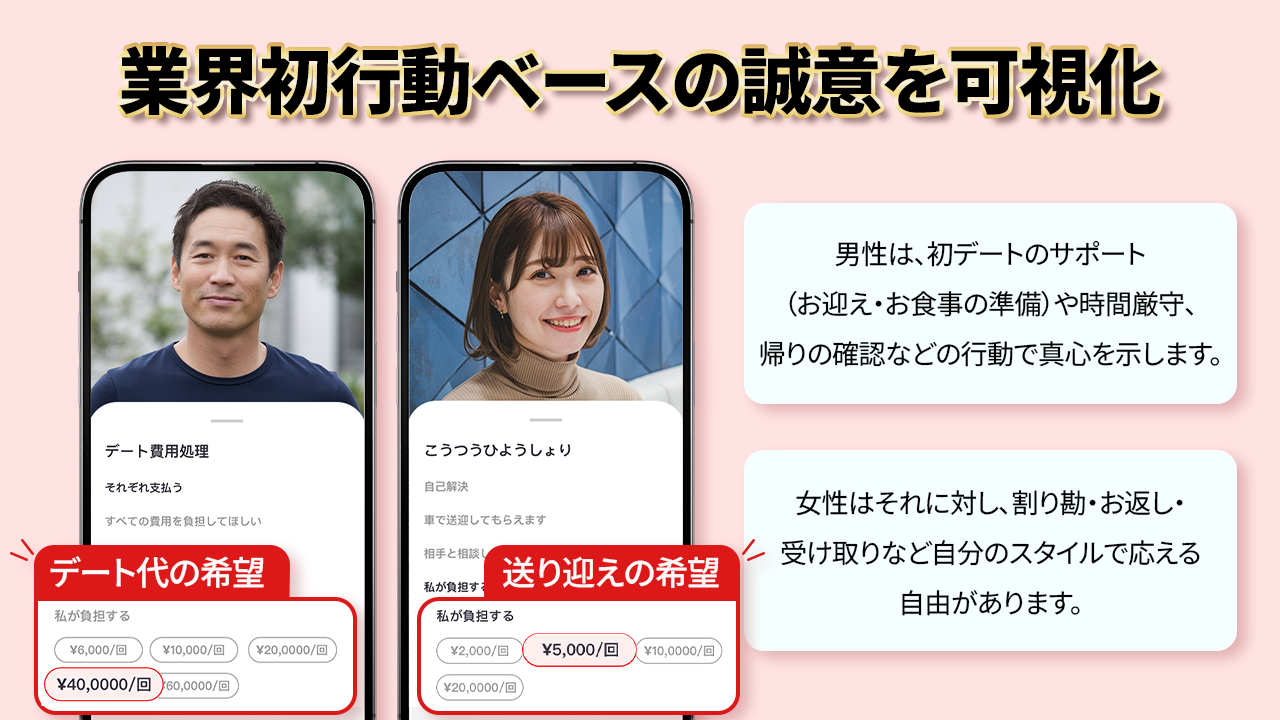
This is not just a matter of courtesy, but rather the first gesture of Mutual Effort. By valuing the time spent with the other person and showing that you have digested its content as your own, you can express your intention to move the relationship forward. In Japan, it is often the case that men cover the cost of the first meal, but this should be viewed as part of this mutual effort rather than an obligation.

Ongoing Dialogue: Avoiding the “Chat Hell” Common in Matching Apps, Fostering Meaningful Messaging

The biggest pitfall after making contact is “chat hell.” Endless exchanges of “Good morning,” “It’s cold today,” “What are you doing?” lead to no deepening of the relationship.

To prevent this, you need to elevate the purpose of messaging from “checking daily connections” to “a collaborative effort to gradually understand each other.”

  • Example of Daily Life Report: “I had a tough day at work today.”
  • Example of Meaningful Message: “Today, I was pressed to make a difficult decision as the project leader, and I thought a lot about it. I remembered when you said, ‘Trust is what moves people.’ What do you think is the most important thing to build trust?”

The latter message is not just a report but reveals your own inner self (conflicts, learning) and poses a deep question about the other person’s values. This transforms the conversation from a mere exchange of information into an exploration of each other’s humanity.

Yoitoki's messaging is designed to encourage precisely this kind of “value-evoking questions” that deepen understanding. Regardless of how the encounter setting changes, the fundamental process of nurturing a relationship remains the same.

Clarifying Intent: Aligning the Direction of the Relationship with Appropriate Timing and Gentle Communication

The most delicate yet unavoidable step when seeking a serious relationship is “Clarity of Intent.” Each person has different hopes regarding the relationship, such as wanting to date with the premise of marriage or wanting to take it slow and deepen understanding from friendship first.

The appropriate timing to communicate this is after a certain level of trust and intimacy has been established, usually after several conversations. The key to communicating it is to frame it as a “dialogue” rather than a “declaration.”

  • How to Avoid Communicating: “I can’t do this unless we’re dating with marriage in mind. What about you?” (Pressuring and imposing a binary choice)
  • Recommended Way of Communicating: “As we’ve talked a few times, I often resonate with how you think about things. It’s really enjoyable to have these conversations. It might be a bit ahead, but if it’s okay, I’d like to share something with you. I hope to build a deep trust relationship where I can grow alongside my partner in the future. What do you value in relationships?”

This approach involves:

  1. First expressing goodwill and respect towards the other person (I-message),
  2. Softly presenting your hopes as “personal thoughts,”
  3. Opening up to the other person with questions to draw out their thoughts.

This is the same reason why Yoitoki provides the opportunity to select “relationship goals” from the early stages on its platform. An environment where a certain degree of direction is shared from the start helps prevent unnecessary misunderstandings and wasted time, allowing both parties to concentrate their energy on “deepening understanding.”

Starting Genuine Encounters with Nakano Pick-Up in Japan

Frequently Asked Questions (FAQ)

Q: How can I determine if someone I approach in Nakano is interested in romance or serious relationships?

A: Direct questions can be daunting. Instead, try talking about future dreams or what’s important to them—conversations that touch on their outlook on life. From there, you can see how they perceive relationships. Yoitoki provides an environment where our AI analyzes value compatibility, gathering members who are conscious of their relationships from the start. Even offline, maintaining a posture of seeking intent through essential conversations helps prevent misunderstandings.

Q: When I approach someone, I get nervous and try to present myself in a good light, which makes me seem different from my true self. How can I be more natural?

A: If you think of it as a performance to win someone over, your tension and unnaturalness will only increase. Change your goal to “making this moment a pleasant time for both of us.” You don’t need to show a perfect version of yourself; focus on being your genuine self and sincerely listening to the other person’s story. The “Emotional Equality” that Yoitoki seeks starts from the foundation of genuine, unadorned selves meeting.

Q: After exchanging contact information, I struggle with the frequency and content of messages. What’s the balance to maintain interest without pressuring the other person?

A: Instead of the operational goal of “maintaining interest,” reframe it as a collaborative effort to “understand each other through dialogue.” Avoid one-sided reporting; aim for a “catch-and-ball” exchange where you respond to the other person’s statements with thoughts or questions. Yoitoki's messaging encourages mutual deep questions to deepen understanding, preventing repetitive superficial exchanges.

Q: Is there a difference in how to build a relationship with someone I met through pick-up compared to someone I met through a matching app?

A: Even if the “trigger” for the encounter is different, the essence of how to build trust and understanding remains unchanged. Rather, because a Nakano pick-up is a highly incidental encounter, the subsequent mutual effort becomes even more important. Intentional meeting places like Yoitoki provide the advantage of facilitating a smoother start towards relationship goals, as both parties are already conscious of their relationship from the outset.

Q: Ultimately, which leads to a more serious relationship, pick-up or online dating?

A: It’s not so much about the method itself, but rather how you utilize that method and the attitude you adopt in nurturing the relationship afterward that is critically important. In pick-up situations, if you judge based solely on superficial appearances or the vibe of the moment, misunderstandings will occur. On the other hand, platforms like Yoitoki provide a “chosen environment” that emphasizes inner compatibility and intention toward relationships from the beginning. What’s important is to consider how you can deeply understand the other person and choose your methods accordingly.

Yoitoki Platform Screen for Nakano Pick-Up Users

Conclusion: Elevating Encounters into a Chain of Intentional Choices

Encounters in Nakano, like the diversity of the city itself, hold infinite possibilities. However, the key to realizing those possibilities into solid relationships lies not just in techniques for choosing places or creating opportunities, but in mutual respect, clear intentions, and dialogues that focus on essence.

What I wanted to convey in this article is neither to deny the act of “pick-up” nor to provide simple techniques to raise success rates. Rather, it is to shift the perspective that, regardless of the trigger for any encounter, the relationships that begin should not be left to chance but transformed into a series of “intentional choices” that sincerely engage with both your and the other person's heart.

It is a relationship that acknowledges each other's values and is unafraid to envision a future together. The comfort to discuss “what we are aiming for” equally from the beginning. A relationship that values inner bonds that do not fade with time, rather than superficial charm.

Shall We Start a New Form of Encounter?

If you’re tired of ambiguous relationships, and are seeking connections built on mutual effort and true understanding, your place is here.

💖

立刻加入吧
开启你的高端专属约会之旅
精英圈层,真实高质,时间与魅力的完美交换
请输入您的电话号码
免费注册
※未满18岁不可注册
邮箱注册
也可以通过下载App进行注册或登录
app storegoogle play
相关文章
no data
查无数据
bg

ヨイトキ
© 2025 OLA PARTY JAPAN CO., LTD. All rights reserved.
网络异性介绍业务注册号:愛宕24-107116