

How to meet the people you truly want to meet in Fujisawa? A place to realize "intentional encounters" and honest communication techniques
“I tried to start a conversation in front of the station, but it didn’t continue,” “I was able to exchange contact information, but nothing followed after…” Are you starting to feel tired of such fleeting encounters? Fujisawa pickup has many opportunities for meeting people, yet somehow, we fail to reach genuine connections. This may be because the encounter itself ends before we can touch on each other’s “intentions” and “values.”
Typical “pickup” guides tend to focus on specific spots or superficial conversation techniques. While choosing a location and taking the first step are indeed important, they alone cannot guarantee the “quality” or “sustainability” of an encounter. This creates a dilemma where relationships break off before we understand each other’s personalities or true interests. In this article, we will introduce methods to take a step further while utilizing the rich environment of Fujisawa. The keywords are “Intentional” and “Mutual.” This is not just a “technique” for approaching someone, but a new approach to encounters based on a “mindset” that respects each other and genuinely wants to build a relationship. We’ll provide practical tips to guide conversations from superficial exchanges to deep dialogues rooted in shared values.

Table of Contents
- New common sense for choosing locations: "Environmental design" that fosters natural conversations
- The first words and beyond: The essence of "communication" conveyed through respect and thoughtfulness
- Building safety and trust: How to weave the "next step" in the digital age
- Frequently Asked Questions (FAQ)
- Summary: Elevating encounters into "the beginning of a relationship"
- Shall we start a new form of meeting?
New common sense for choosing locations: "Environmental design" that fosters natural conversations
Traditionally, choosing “Fujisawa pickup spots” often stayed within the criteria of “having many opposite sexes” and “being easy to approach.” However, if you are truly seeking the beginning of a sustainable relationship, you need to shift your perspective to “an environment that easily creates opportunities for natural conversations.” This thinking is directly linked to Yoitoki’s concepts of “Mutual Effort” and “Deep Compatibility.” By designing a space for “co-creation” based on shared experiences and hobbies rather than one-sided “flirting,” a foundation for understanding each other from the start is established.
“Activity spots” that create common experiences
Places where you can engage in some kind of “activity,” such as dart bars, board game cafes, art workshops, or cooking studios, significantly reduce the pressure to become “a couple” from the get-go. Conversation starters are readily available, and while sharing explanations of game rules or thoughts on creations, you can naturally observe the other person's reactions, thought patterns, and cooperativeness. For instance, casual chats while waiting for your turn in darts or collaborations in board games provide much denser “mutual understanding opportunities” than just standing and talking. Just like how Yoitoki’s AI matching explores compatibility based on hobbies and values, finding “shared enjoyment” offline is the first step to confirming deep compatibility.
“Daytime cafes and reading spaces” that promote relaxed dialogue
Fujisawa offers many cafes with a calm atmosphere where you can enjoy work or reading, and spaces where you can gaze at the Shonan sea. Such environments have the advantage of naturally transitioning to deeper topics. The book the other person is reading, stickers on their laptop, or the stationery they have are excellent conversation starters. Starting with comments about the environment, like “I’m curious about that book,” or “This calmness here is great for focusing,” avoids being pushy. This approach demonstrates a “sincere intent” by respecting the other person’s “personal world” while showing interest in it. This is precisely the practice of “Emotional Equality.” It begins not with one-sided intrusion but by acknowledging the other person’s choices and existence.
Utilizing group encounters through “standing bars and shared dining”
Standing bars where friends gather and dining bars that have a policy of shared seating are suitable for building relationships through a relaxed entry point of “group vs. group (or individual).” Even if you lack the courage to approach someone alone, being with friends lowers psychological barriers. You can also enter conversations indirectly through friends, allowing for a natural integration into the group. This type of meeting through “social context” can be said to be more realistic and sustainable because you are evaluated not only as an “individual” but also based on how you interact with your friends, reflecting your “sociability.” The community Yoitoki aims for is like a “trustworthy group” where individuals with the same aspirations gather. Choosing such an environment offline is the first step towards high-quality encounters.

The first words and beyond: The essence of "communication" conveyed through respect and thoughtfulness
Once you have chosen a location, the next step is actual communication. What’s important here is not the “technique” of conversation but how to convey respect and thoughtfulness as a “mindset.” Psychology tells us that people naturally feel a sense of security and trust toward those who show interest in them and listen carefully to what they have to say. In this section, we will explore how to embody Yoitoki's core principles of “Clarity of Intent” and “Emotional Equality” in specific conversations.
Non-pushy “environment comments” based on observation
Rather than directly complimenting appearances, let’s first focus on the “shared environment.” “That book has a lovely cover. What genre is it?” “I really like the calmness of this place. Do you come here often?” “The sea today is so calm and nice.” — Such comments show your sensitivity to the situation without identifying or evaluating the other person as an individual (which can sometimes create pressure). This attitude recognizes the other person not as a mere “object” but as a “subject” sharing the same environment. Your intent transforms from a simple “I’m interested in you” to a more universal and respectful message: “I think this moment and space we share together is wonderful.”
“Open questions” to peek into the other person's world
When asking questions, aim for open-ended questions that draw out the other person’s thoughts or experiences rather than closed ones that can be answered with “yes” or “no.”
- (Closed question) “Do you live in Fujisawa?”
- (Open question) “How do you plan to spend your time in Fujisawa today?”
- (Closed question) “Is this your first time at this cafe?”
- (Open question) “What do you value most when searching for a cafe with this kind of atmosphere?”
Open questions leave the “choice of answers” to the other person. This is a clear sign that you respect their opinions and choices. From their responses, you can glimpse their priorities, hobbies, and values. Just as Yoitoki's “Kokoromusubi” AI explores values from deep psychology, even offline conversations can invite the other person’s inner world with questions like “What do you think?” or “How do you feel?”
“Dialogue rhythm” created by listening and empathy
Consider the flow of conversation after approaching someone as a time for “sharing a dialogue” rather than just “talking about yourself.” The most important thing for this is “listening.” Nod, lightly repeat the other person’s words (mirroring), and show empathy that aligns with their emotions. “That must have been tough,” “That’s exciting,” or “Indeed, that’s one way to think about it.” These words convey the message: “I’m focused on what you’re saying,” “I’m trying to understand your feelings.” Rather than bombarding them with questions, respond to what they say by gradually sharing your relevant experiences or thoughts. When this rhythm of “catching the ball” is created, the path to “mutual understanding” opens up for the first time. This is arguably the most basic and important form of practice in creating “emotionally equal relationships,” as advocated by Yoitoki.
💡 Yoitoki Insights: Beyond Algorithms
The challenges you face are precisely why we developed “Kokoromusubi.” While other apps match based on superficial features, our AI perceives “deep compatibility” through how you deal with stress, show thoughtfulness, and share values.
👉 Find your true compatibility with Yoitoki →

Building safety and trust: Weaving the "next step" in the digital age
If the initial conversation progresses well, it’s just the starting line. Exchanging contact information and figuring out how to weave the next relationship is what separates fleeting encounters from real connections. Here, we will consider how to apply Yoitoki’s focus on “Quality & Safety” and “Mutual Effort” to the next steps, including digital communication.
Timing and first words for natural LINE exchanges
Exchanging contact information is a clear indication of your desire for the relationship to "continue." Therefore, tying this reason to the content of the conversation is the most natural approach. “I found your discussion about XX today really interesting. If you don’t mind, I’d love to hear about that author’s other works,” or “I’m thinking of checking out that place you recommended earlier. I’ll let you know how it goes.” By proposing LINE exchanges as a means to continue the shared experience or topics, the act itself demonstrates “clarity of intent.” The first words after the exchange should also be specific, such as “I really enjoyed talking today. Thank you very much,” to express gratitude.
Proposing the first date based on “shared experiences”
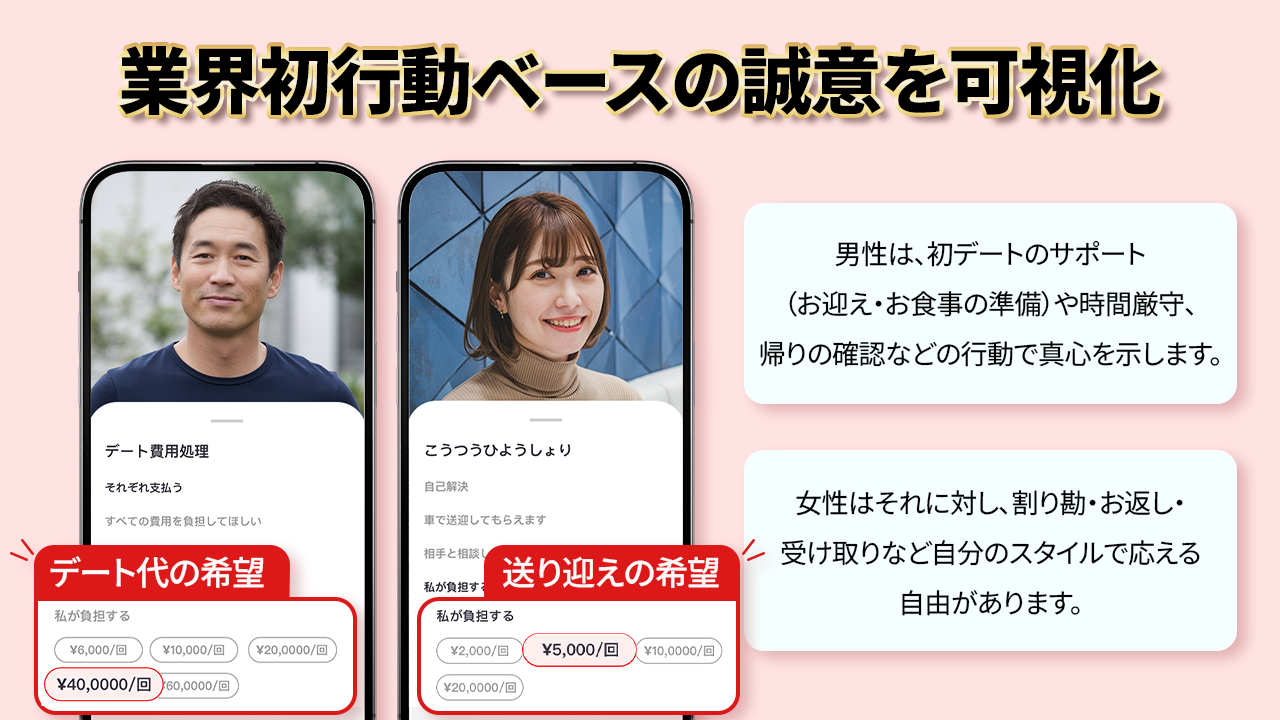
When inviting someone on a date, using a generic line like “Shall we go out for a meal?” might dilute the “special connection” that has just started to form. Instead, suggest solidifying the “shared interest” that emerged during your first conversation. “The exhibition we talked about the other day seems to be on until this weekend. Would you like to join me?” or “The band that played at this cafe the other day is apparently doing a small live show…”. This is the best expression of “respect,” showing that you remember the other person’s words and value them. Additionally, it is perceived not merely as a custom when Yoitoki users, especially men, tend to cover transportation and dining costs during the first meetings; it’s seen as a “gesture of sincerity and respect.” This is part of “mutual effort” and a way to show consideration for the other person.
Respecting intentions and pace: Balancing “wanting to meet again” and “not rushing”
As the relationship progresses, how to convey your feelings and respect the other person’s pace becomes crucial. If you desire a serious relationship, an ambiguous attitude can create distrust instead. “I really enjoy spending time with you. I’d like to take my time to get to know each other better,” for instance, conveys a positive intention straightforwardly without putting pressure on the other person. Just as Yoitoki’s platform is a community of individuals with “clear intentions,” so is it essential to align your stances regarding the relationship offline to build long-term trust. Instead of rushing or pressing, the mindset of “nurturing the relationship” through accumulated trust is key to sustainable partnerships.

Frequently Asked Questions (FAQ)
Q. When searching for encounters in Fujisawa, which is recommended, dating apps or real-life encounters?
A. Both have their pros and cons. Apps are efficient, but there are limitations to profile information, while real-life encounters depend heavily on the initial chemistry, though opportunities to understand the deeper sides of each other come later. Utilizing a service like Yoitoki that diagnoses deep compatibility based on values and life views can help you advance the stage of “wanting to know this person more” on a more solid foundation after meeting in person.
Q. I get really nervous about approaching someone. How can I overcome this?
A. Nervousness is a sign of a sincere desire to build a good relationship with the other person. Rather than searching for the perfect line, try starting with gratitude like “I’m glad to share this place” or genuine curiosity like “I’m interested in what you have (the book you chose, the atmosphere, etc.).” What Yoitoki emphasizes is not “superficial skill” but “essential personality.” Even offline, conveying your genuine “interest” will be the most powerful approach.
Q. From a woman’s perspective, when do you feel happy or safe when approached in Fujisawa?
A. (Comment from a female writer or psychology expert) “I become interested when someone notices the context of the situation or my actions (the book I’m reading, what I’m looking at) rather than offering abrupt compliments about my appearance. Additionally, I feel respect and safety from someone who listens to my story without interrupting and genuinely absorbs it. If I can sense the principle of ‘emotional equality’ that Yoitoki advocates from the very first conversation, I can consider the next steps positively.”
Q. I often end up not being able to deepen relationships, even if I start off well. What should I do?
A. This may be because the elements necessary for the “entrance” of an encounter and for its “sustainability” are different. Sustainability requires mutual understanding of values and lifestyles that go beyond superficial interests. This is exactly the process Yoitoki’s “Kokoromusubi AI” engages in, searching for deeper alignment in hobbies and ways of thinking. Even offline, try gradually shifting your conversations to questions that inquire about values, like “What do you think?”
Q. I want to build a serious relationship, but wouldn’t it be too heavy to convey that intention from the start?
A. This isn’t the same as declaring “Please date me with marriage in mind” right off the bat. What should be conveyed is your “attitude.” Show through words and actions your stance on relationships, such as “I’m not looking for a one-night stand,” or “I want to take my time to get to know each other and build a sincere relationship.” Yoitoki gathers users with this kind of “clear intention” from the start, creating an environment with fewer unnecessary misunderstandings between each other.

Summary: Elevating encounters into "the beginning of a relationship"
The key to transforming encounters in Fujisawa pickup from a mere “success in approaching” to “the beginning of a meaningful relationship with another person” lies in consideration for the environment, respectful communication, and clarity of intent. These elements serve as the foundation for building a future-oriented relationship rather than a one-night stand.
As these types of encounters accumulate, a deeply fulfilling partnership emerges, where both parties respect each other from the start and share values. Isn’t that the kind of relationship you are truly seeking, especially after being exhausted from ambiguity and misunderstandings?
Encounters offline are just the first step. Don’t you want to start the subsequent process of “truly knowing each other” on a more solid, intentional foundation?
Shall we start a new form of meeting?
If you are tired of ambiguous relationships, and if you seek a connection built on mutual effort and true understanding, your place is here.